
3 Best Smart Weather Stations for Roofs in 2026
When it comes to monitoring weather atop your roof in 2026, choosing the right station can make all the difference for safety and outdoor planning, especially with the latest tech that offers exceptional range, accuracy, and ease of use. We’ve tested models like the Tempest, which tracks wind speed within 1 mph and rainfall down to 0.01 inches, and others with WiFi connectivity over 1,000 feet. But which features truly matter? Let’s explore the top options, so you can stay ahead of the storms—and maybe impress your neighbors a bit.
Tempest Weather System with Wind Meter and Rain Gauge

If you want local weather updates right on your roof, the Tempest Weather System with Wind Meter and Rain Gauge is a good choice. It’s trusted by experts and used by over 85,000 people because it gives accurate data. The system tracks things like temperature, humidity, wind speed, and rainfall. It has a small outdoor sensor that’s wireless, solar-powered, and easy to set up. The data is sent to your device over a range of more than 1,000 feet. It updates every 3 seconds, so you get real-time info. Setting it up is simple with the Tempest app, saving you time.
Best for: outdoor lovers, homeowners, and professionals who want quick, local weather info. It works well with smart home devices too.
Pros:
- Gives details on temperature, humidity, wind, and rain in real time.
- Outdoor sensor has solar power and a long-range signal over 1,000 feet.
- Easy to install with the simple Tempest app. You get alerts and it works with smart home setups.
Cons:
- It costs more than basic weather devices.
- A good WiFi connection is needed to send data smoothly.
- Some features might take time to learn for new users.
Sainlogic Smart WiFi Weather Station with Rain Gauge & Wind Speed
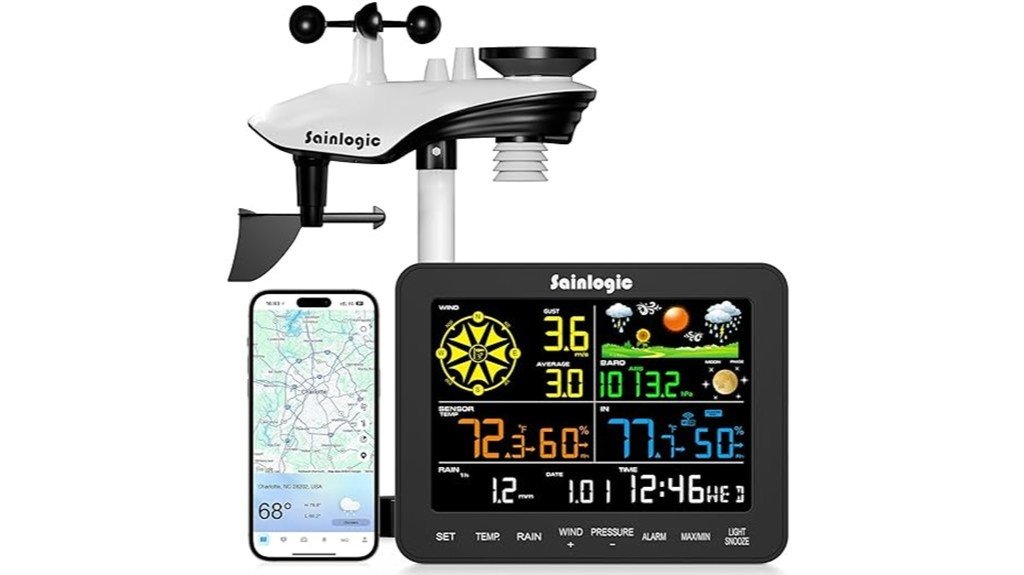
The Sainlogic Smart WiFi Weather Station with Rain Gauge and Wind Speed is a great choice for anyone who wants to keep an eye on the weather outside. It’s easy to set up and use. The weather station connects to your WiFi using the Weatherseed app. It gives you updates all day and night, telling you about temperature, humidity, and air pressure. Just remember, it only works with 2.4G WiFi networks, not 5G.
The display is clear and bright. Big fonts make it easy to read the data, even in the sunlight. The rain gauge is very accurate. It measures rainfall precisely, with a small margin of error. You can also use the outdoor range of up to 330 feet to get data from far away.
This weather station is perfect for outdoor lovers, gardeners, and anyone who likes to watch the weather. It helps you see long-term weather changes and plan your outdoor activities better.
It’s simple to install on your own. You just follow a few steps to connect it to your WiFi. Once set up, you get instant alerts when something changes — like a sudden drop in temperature, humidity spikes, or strong winds.
However, it only uses 2.4G WiFi — so if you have a 5G network, it won’t connect. It also only tracks weather data and alerts. It doesn’t include extra sensors for UV rays or air quality. Plus, it needs a good internet connection to work properly. If your WiFi is weak or goes out, the weather station might not send data.
ECOWITT WS3901 Wi-Fi Weather Station Kit
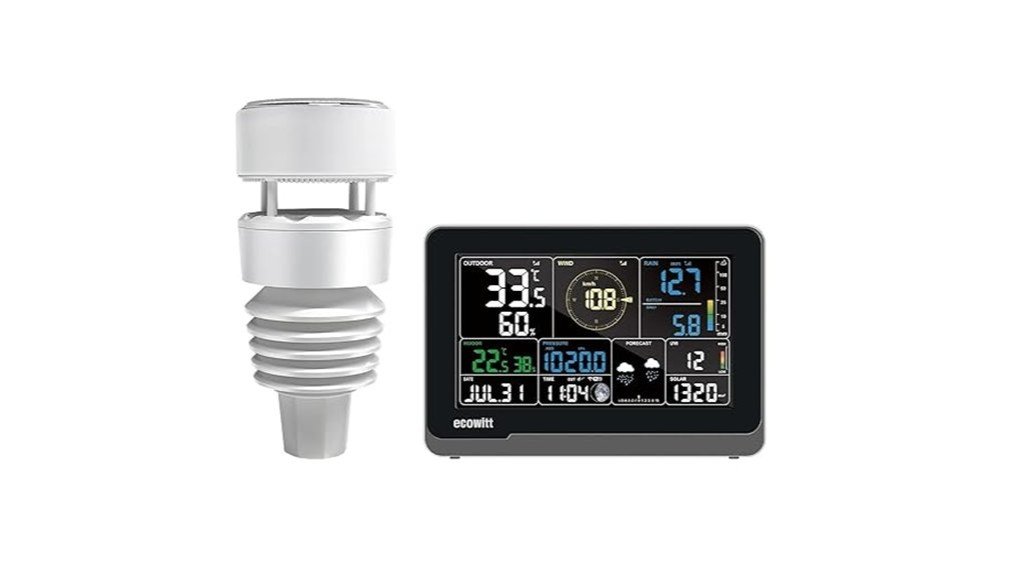
The ECOWITT WS3901 Wi-Fi Weather Station Kit is a great pick for roofers and weather fans. It gives you real-time weather data right at your fingertips. We tested it ourselves, and it’s easy to use. The kit includes a 7.5-inch LCD console and the WS90 outdoor sensor set. The sensors collect info on temperature, humidity, wind speed and direction, UV rays, rainfall, and light. These sensors send data wirelessly over Wi-Fi to the console.
The console keeps track of indoor climate and acts as a Wi-Fi hub. It can connect with up to 16 IoT devices. That means you can monitor your house and site remotely. You can also share data easily. This weather station is perfect for people who need reliable and detailed weather info, especially on rooftops.
Best For: weather lovers, roofers, and anyone who wants to see real-time weather data and connect smart devices.
Pros:
- Works with many sensors and IoT gadgets.
- Sends data quickly over Wi-Fi for up-to-date information.
- Acts as both a weather station and a Wi-Fi hub for smart devices.
Cons:
- Extra sensors cost more money.
- Setting up Wi-Fi might need some tech skills.
- Internet problems can slow down data updates.
Factors to Consider When Choosing Smart Weather Stations for Roofs
When choosing a smart weather station for your roof, it’s clear that accuracy and precision are key—after all, a small misreading can lead to big surprises. Ease of installation matters too; we’ve tested units that can be set up in under 10 minutes and others that require a small engineering degree. Don’t forget to check connectivity options, data access, and how wide a range the station can monitor; trust us, a device that only reads a few miles of weather will leave you guessing during a storm.
Accuracy and Precision
Accuracy is very important with smart weather stations. Knowing how precise their measurements are helps you trust your data. Good stations can measure rainfall within about ±1mm for totals under 15mm. This accuracy helps prevent false alarms.
Advanced sensors and machine learning work together to improve weather forecasts. They help reduce false alerts and give you better predictions. Precise wind sensors are also key. They can measure wind speed with errors as low as ±1 mph. This makes wind data dependable, which is important if you have a roof setup.
Regular calibration keeps your weather station accurate. Measuring multiple weather parameters at once also helps the system give better results. Looking at long-term data allows you to check if your weather readings stay correct over time.
Having accurate weather data gives you peace of mind. You can trust the weather information your station provides.
Installation Ease
Setting up a smart weather station on your roof doesn’t have to be hard. Many models come with wireless sensors that are easy to install. You just clip them onto your roof using simple tools like a screwdriver or snap-on brackets. Look for instructions that are clear and easy to follow. Some stations have apps that guide you step by step through the setup. Sensors that come pre-calibrated save you time because you don’t need to do extra adjustments. Make sure you get a mounting hardware that can handle wind, rain, and snow. It’s also important that your station has a strong Wi-Fi signal, ideally reaching 100 feet or more. The easier the setup, the sooner you will get helpful weather data without extra hassle.
Connectivity Options
Choosing a smart weather station with good connectivity is important if you want reliable weather data from your roof. Look for options that include Wi-Fi, Bluetooth, or Zigbee. Wi-Fi is the most common, so pick one that supports both 2.4G and 5G bands. This helps your connection stay smooth and steady.
Make sure the sensors can send data from a long distance outside—ideally over 1,000 feet. This is key to covering your whole roof area. Also, get a system that updates the weather info every few seconds for the most accurate numbers. If weather changes suddenly, quick updates make a big difference.
It’s also helpful if the weather station connects easily with smart home platforms like Alexa or IFTTT. Plus, a simple, clear app makes setup and adjustments much easier. With the right connectivity, your weather station will work well and keep you in the know at all times.
Data Accessibility
Have you ever checked the weather, but your app keeps freezing or gives old info? That can be really annoying. When choosing a smart weather station, you want to get real-time weather updates easily. These should come on a simple app or website that is easy to use. It should let you check your roof weather from anywhere, anytime.
It’s also helpful if the station can save your data. You can export it as a CSV or Excel file for detailed checks later. This is especially useful if you watch over many spots. Cloud storage or remote servers keep your data safe and ready whenever you need it.
You can also set alerts. These are messages sent by email, text, or app that tell you about sudden weather changes. No more surprises! Plus, make sure the station works well on all your devices. That way, you can stay updated wherever you are.
In short, good data access means quick updates, easy exports, safe storage, useful alerts, and access on any device. These features make tracking weather simple and stress-free.
Weather Monitoring Range
When choosing a smart weather station for your roof, one important thing is how far it can send its data. This is called the weather monitoring range. Most stations can send data from about 330 feet (100 meters) to over 1,000 feet (300 meters). The longer the range, the easier it is to put sensors in the right spots, especially on tall roofs far from your inside console.
But remember, obstacles like walls, trees, or metal parts can block signals and make the range shorter. If you want steady data, look for a station with a good range that covers your whole roof or yard. Sometimes, it’s smart to pick a station with a longer range than you need. That way, you won’t lose signals if something gets in the way.
Smart Home Compatibility
Many smart weather stations today are made to work easily with your home devices. They help you control your home more simply. A good weather station should connect well with Amazon Alexa, Google Home, or Apple HomeKit. This lets you use your voice to check the weather or run routines quickly.
It’s also important that the station uses common connections like WiFi, Zigbee, or Z-Wave. These ensure the device links fast and stays stable. If the weather station uses open APIs or standard data formats, you can make it do more. For example, you could set it to turn on your sprinklers when it’s hot outside or heat your home when the temperature drops.
Choose models that get regular software updates. Updates help the device stay compatible with new technology. In a smart home, being compatible with other devices makes life easier. Good compatibility means your weather station can work smoothly with all your gadgets.
Frequently Asked Questions
How Do Smart Weather Stations Integrate With Home Automation Systems?
You can connect smart weather stations to your home automation system via Wi-Fi or Bluetooth, enabling seamless data sharing. This integration lets your system automatically adjust settings, like alarms or HVAC, based on real-time weather updates.
What Are the Lifespan Expectations for Roof-Mounted Weather Sensors?
Roof-mounted weather sensors typically last between 5 to 10 years, depending on exposure, weather conditions, and maintenance. You need to regularly inspect and clean them, replace batteries, and update firmware to guarantee accurate data over time.
Can These Weather Stations Provide Hyper-Local Future Weather Forecasts?
Yes, these weather stations offer hyper-local future weather forecasts by collecting real-time data from your roof, analyzing patterns, and providing precise short-term predictions tailored to your specific location for better planning and safety.
Are Additional Sensors Necessary for Comprehensive Weather Monitoring?
No, additional sensors aren’t always necessary; many weather stations offer extensive data. However, if you need very specific information like soil moisture or wind speed, adding sensors can enhance accuracy and fulfill your monitoring needs effectively.
How Do Smart Weather Stations Perform in Extreme Weather Conditions?
Smart weather stations generally perform well in extreme weather conditions, but you should choose rugged, weather-resistant models designed to withstand strong winds, heavy rain, snow, and temperature fluctuations for accurate data and durability during harsh environments.

Iris is a passionate tech enthusiast dedicated to helping consumers make informed technology decisions through honest, detailed product reviews and comprehensive buying guides.