
3 Best Smart Water Leak Detectors of 2026
If you’ve ever faced a surprise flood, you know how quickly water damage can ruin your day—and your wallet. In 2026, smart leak detectors become essential, offering sensitive detection down to tiny drips and long-lasting batteries, often over a year. We’ve tested models like the Frizzlife LP365, which features adjustable sensitivity and remote shutoff, and the GoveeLife kit, perfect for covering multiple spots. Interested in safer, smarter home protection? There’s more to think about before you pick the best fit for your space.
Frizzlife LP365 Smart Water Monitor and Shutoff System
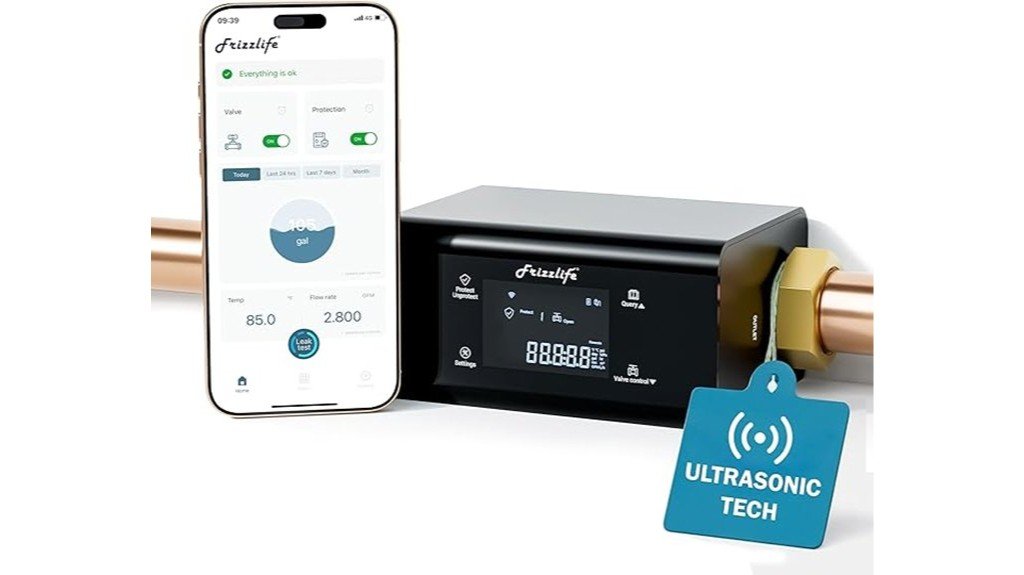
If you want to protect your home from water damage, the Frizzlife LP365 Smart Water Monitor and Shutoff System is a good choice. It is great for homeowners who like to use technology to stay in control. We tested it ourselves, and it can find tiny leaks using ultrasonic detection. It notices flow changes as small as 0.01 GPM. When a leak is found, it sends instant alerts by SMS, app notifications, and phone calls. It also automatically turns off the water to stop damage. The system works with standard pipes and connects to the “Smart Life” app, so you can control it from anywhere. You can also customize the settings to reduce false alarms. Overall, it’s a smart and reliable option.
Best For: Homeowners who want advanced leak protection with remote control and automatic shutoff.
Pros:
- It detects tiny leaks early by sensing flow as small as 0.01 GPM.
- You can control and monitor it from anywhere using the “Smart Life” app.
- You can change the settings to fit your home and reduce false alarms.
Cons:
- It’s better to have a professional install it, which may take more time and cost more.
- It needs Wi-Fi to work. If your internet goes down, it might not function properly.
- It may cost more than simple water monitors.
GoveeLife Premium Smart Water Leak Detector 2 (4 Pack)
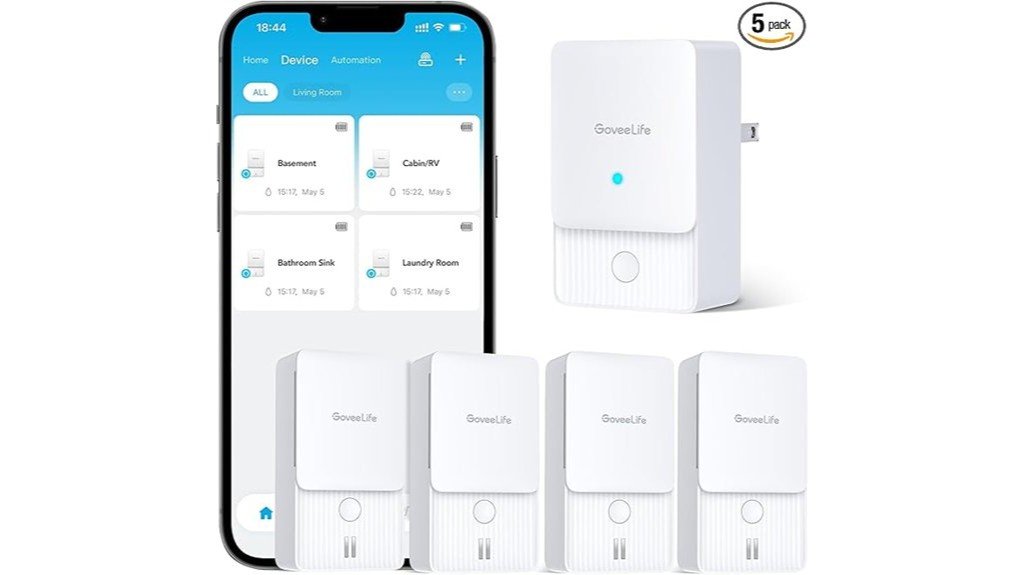
The GoveeLife Premium Smart Water Leak Detector 2 (4 Pack) is a good choice for homeowners who want a simple, reliable way to find water leaks. It works without needing extra hubs or complicated setup. The small, tough design made of ABS+PC plastic is waterproof with an IP66 rating. This makes it perfect for damp places like basements and kitchens.
The detectors run on eight AAA batteries that last over five years. They use LoRa technology to send signals up to 1968 feet away. This long range helps cover big areas or multiple floors. You only need to connect them to Wi-Fi. Then, you get instant alerts on your phone as SMS, email, or app notification. During testing, the loud alarm and app alerts made it clear when there was a leak.
Best For: Homeowners who want a simple, long-distance leak detection system that does not need extra hubs or wires.
Pros:
- Connects from up to 1968 feet away with LoRa technology.
- Easy Wi-Fi setup with quick app alerts.
- Can work with smart home systems like Google Home.
- Waterproof design with a loud 100dB alarm to get your attention fast.
Cons:
- The main hub can be big and may block some power outlets.
- The sensors are a bit larger, so place them carefully near water sources.
- Battery replacements happen rarely but need occasional attention. Some might find this cost more over time.
This system makes it easy to spot leaks early and avoid water damage. Its long range and simple setup help you stay protected, whether you have a small or big home.
WiFi Water Leak Detectors 5 Pack, App Alerts & 120dB Loud Water Leak Sensors
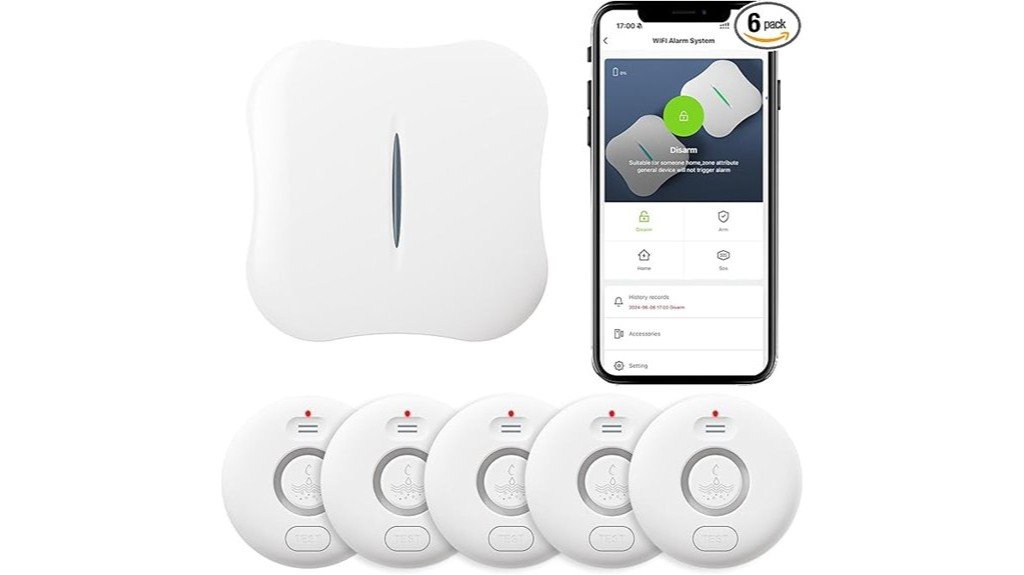
If you want to protect your home from water damage, the WiFi Water Leak Detectors 5 Pack are a good choice. They stay connected through 2.4GHz WiFi, so make sure your router uses that band. These sensors work with the Tuya Smart app, so you can check for leaks from anywhere. Two sensors help find leaks fast—one detects dripping water and the other senses pooling. When a leak happens, a loud 120dB alarm sounds, and your phone gets a notification. You can also change alert settings and test the sensors easily.
Best for: Homeowners who want quick alerts and remote monitoring in places like kitchens, bathrooms, and laundry rooms.
Pros:
- Connects with stable 2.4GHz WiFi over a long distance inside.
- Two sensors catch leaks early — one for drips, one for pools.
- App alerts help you stay informed and allow custom settings.
Cons:
- Only works on 2.4GHz WiFi, no 5GHz support.
- Uses AAA batteries that need changing now and then.
- Made for indoor use; WiFi range is about 150 feet inside.
These detectors are simple to set up and help you catch water leaks early. They give peace of mind so you can protect your home easily.
Factors to Consider When Choosing Smart Water Leak Detectors
When choosing a smart water leak detector, you’ll want to pay attention to its detection sensitivity—some can sense leaks as small as a teaspoon of water, while others need more. Connectivity options matter too; we’ve found that WiFi models often offer faster alerts, but Bluetooth ones are simpler to set up. And don’t forget about alarm volume—because nothing says “surprise leak” like a loud 120dB siren in the middle of the night!
Detection Sensitivity
Understanding how sensitive a water leak detector is can help protect your home better. Some models can notice even tiny leaks by sensing water flow as low as 0.01 gallons per minute (GPM). This means they can catch small leaks early before they cause big problems.
Many detectors have adjustable sensitivity settings. This is helpful because it lets you change how sensitive the device is. For example, if you water plants often, you can set it a little higher so it doesn’t give false alarms when watering. On the other hand, if you want to catch small leaks immediately, set the sensitivity low.
Different sensors affect how well the detector finds leaks. Ultrasonic sensors are good at noticing tiny changes in water flow. Multi-probe systems use more than one sensor to locate leaks exactly. Pick a detector with adjustable sensitivity so you can set it just right for your home. This helps stop false alarms and makes sure real leaks are caught quickly.
Connectivity Options
Choosing the right way for your water leak detector to connect to the internet matters a lot. It affects how fast you will get alerts when there’s a leak. Most leak detectors use Wi-Fi, usually on the 2.4GHz band. Some don’t support the faster 5GHz band, which can slow down alerts if your house uses that band.
LoRa technology is another option. It can send signals over longer distances—sometimes over 1,000 feet. This makes it good for big homes or homes with many floors. It does not depend on Wi-Fi, so it can be a better choice in some cases.
Each connection type affects how easy it is to set up your system and how well it works with other smart devices. A strong, steady connection is important. Without it, the leak detector can miss leaks.
Tip: Use multiple sensors and different connection types. This gives you the best coverage. It helps ensure your entire home stays protected from water leaks.
Alarm Volume
Ever wonder if your alarm will wake up the whole house or go unnoticed? We tested different smart water leak detectors, and alarm volume makes a big difference. Some make sounds up to 120dB. That’s loud enough to be heard from across several rooms. This helps you catch a leak early and stop water damage.
Some models let you change the volume. That’s helpful if you live in a quiet neighborhood or if you have sensitive ears. How you place the detector also matters. If it’s in a hidden corner, you might need a louder alarm.
A loud, adjustable alarm makes it easier to get your attention fast. This way, you can stop leaks before they cause problems. A good tip: test the sound level in your space. Make sure it’s loud enough so you can hear it clearly.
Installation Ease
Installing smart water leak detectors should be easy. The simpler the setup, the better. Plug-and-play models are the easiest. They don’t need tools or wiring. Just follow clear instructions or watch quick videos. This makes placing them simple. Wireless detectors are a good choice. You can put them anywhere within Wi-Fi range. Moving them is easy too. Just pick them up and place them somewhere else. Make sure the detector fits common plumbing sizes. You don’t want a fancy sensor that won’t fit your pipe. Easy installation helps keep your home safe without any hassle.
App Compatibility
Since your smartphone is probably the device you use most, it’s important to make sure the water leak detector’s app works with your system. You don’t want to use multiple apps or deal with bugs. The best apps work on both iPhone and Android phones. They let you watch for leaks, get alerts, and change settings easily. These options help you control water leaks the way you want.
It’s a bonus if the app works with smart home systems like Alexa, Google Home, or Apple HomeKit. That way, you can control everything from one place. Look for apps that get regular updates and send clear notifications about leaks, battery levels, or problems. Some apps even let you set schedules or automation. This makes checking for leaks simple and hands-off, so you can feel safe without constant fuss.
Coverage Range
Have you ever thought about how far your water leak detector can send signals? We tested different models to find out. Basic Wi-Fi leak detectors work best indoors and can cover about 150 to 328 feet. That’s enough for small apartments but may not be enough for big houses.
Some detectors use LoRa technology. These can send signals up to nearly 2,000 feet. They are good for large yards or outdoor areas. Using several sensors in different places can improve coverage. Many systems use a hub to connect the sensors.
Walls, insulation, and other things in your house can make signals weaker or block them completely. It helps to plan where to put sensors before installing. Place sensors in areas where leaks are most likely. This helps avoid dead spots where signals don’t reach.
A smart tip: take some time to think about where to put sensors. Good placement makes sure your leak detector works well. This way, you’ll catch leaks early and avoid water damage.
Battery Life
A smart water leak detector with a long-lasting battery can be a big help for home safety. Batteries that last over 3 to 5 years mean you don’t have to change them often. This keeps your device working all the time without worries. The type of battery matters too. Lithium batteries usually last longer and work better in cold or damp places than alkaline ones. Some detectors have a low-battery alert. This shows you when to change the batteries before the device stops working. Some models use rechargeable batteries. These can save you money and are better for the environment. But, how long they last depends on how often you use them. Tip: Keep extra batteries nearby so you’ll be ready if a leak happens.
Integration Features
When choosing a smart water leak detector, it helps to see how well it works with your current smart home devices. Look for models that can connect with Alexa, Google Home, or Apple HomeKit. This makes checking alerts easy, even when you’re busy or away. Wireless options like Wi-Fi, Zigbee, or LoRa make installation simple because there’s no need for messy wires. App control is also useful. It lets you see leak alerts anytime on your phone, whether you’re at work or on vacation. Some detectors can even send you instant notifications.
Features that let the detector turn off water valves or sound alarms add extra safety. If you want to customize things further, pick a model that works with third-party devices. That way, you can set it to activate sprinklers or send a text message to your plumber. Keep these tips in mind to find a leak detector that fits your home and keeps your water safe.
Frequently Asked Questions
How Long Do Smart Water Leak Detectors’ Batteries Typically Last?
Smart water leak detectors’ batteries usually last between one to three years, depending on usage and model. You should regularly check and replace or recharge them to guarantee continuous protection against water damage.
Are These Leak Detectors Compatible With Smart Home Systems?
Yes, many smart water leak detectors are compatible with popular smart home systems like Alexa, Google Home, or Apple HomeKit. You can easily integrate them, receive alerts, and control them through your existing devices for added convenience and security.
Can Leak Detectors Differentiate Between Minor Leaks and Flooding?
Leak detectors primarily identify leaks and flooding by sensing water presence, but they can’t distinguish minor leaks from major flooding automatically. You’ll need to monitor alerts and respond promptly to prevent damage and assess leak severity manually.
What Is the Recommended Maintenance Schedule for These Devices?
You should check and test your smart water leak detectors monthly, replace batteries annually or as needed, and keep the sensors clean and dry. Regular maintenance guarantees they function effectively, giving you peace of mind and early leak detection.
Do Leak Detectors Work Effectively on Uneven or Textured Surfaces?
Leak detectors can work effectively on uneven or textured surfaces if you position them properly, ensuring the sensors make direct contact or are close enough to detect leaks, although flat surfaces generally provide the most reliable detection.

Iris is a passionate tech enthusiast dedicated to helping consumers make informed technology decisions through honest, detailed product reviews and comprehensive buying guides.