
3 Best Smart Door Sensors With Auto-Lock in 2026
If you’re like us, choosing a smart door sensor isn’t just about fancy tech but real security—that’s why we’ve tested several options that combine auto-lock features with ease of use. From WiFi-enabled models that connect directly to your phone to Bluetooth options with quick fingerprint recognition, each brings something different to the table. We’ve seen tiny differences in battery life, lock strength, and app alerts that could make or break your peace of mind. Curious? Keep going; the best might be closer than you think.
Keyless Smart Door Lock with WiFi & App Control
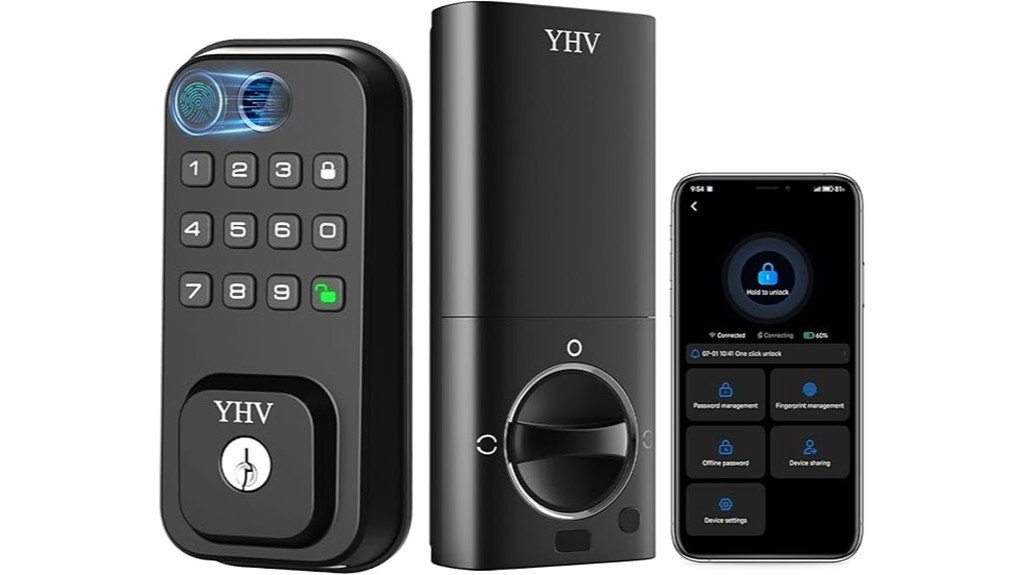
If you want a lock that is easy to use and keeps your home safe, the Keyless Smart Door Lock with WiFi and App Control is a great choice. It opens quickly with a fingerprint that takes just 0.3 seconds. You can save up to 50 fingerprints, so family members can unlock easily.
This lock has six ways to open it. You can use the app, keypad, physical key, voice command, and more. It works with Alexa and Google Assistant, so you can lock or unlock the door by talking. The black finish looks nice and modern. It’s also easy to install, making it a good option for any home. It gives you peace of mind and convenience.
This lock is good for anyone who wants a keyless, secure, and modern door lock for their home or office.
Advantages:
- Opens fast with fingerprint in just 0.3 seconds.
- Many ways to unlock: app, voice, keypad, or key.
- Made with strong stainless steel. It’s tested to be secure and weather-proof.
Disadvantages:
- Needs 8 AA batteries, which last about 10 months.
- Batteries are not included, so you have to buy them.
- Installing the lock may be tricky if you are not handy.
This lock makes keyless entry simple and safe. It combines easy technology with good security, so you can feel confident your home is protected.
Smart WiFi Door Sensor with App Alerts, No Hub Needed, Compatible with Alexa & Google
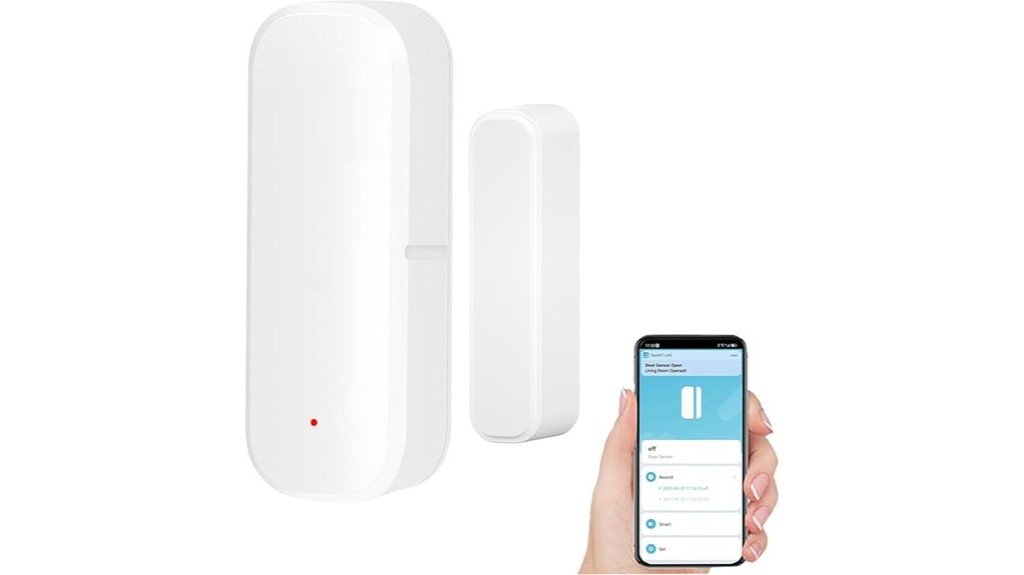
If you want an easy way to keep track of doors and windows, the Smart WiFi Door Sensor with App Alerts is a good choice. You don’t need a hub. Just connect it to your 2.4GHz WiFi, and you’re ready. It’s simple to install with the included sticky tape.
When you open or close a door or window, the app sends you a quick notification. You can check the sensor’s status anytime. It works with Alexa and Google Assistant, so you can ask your voice assistant if the door is open or closed.
The sensor works well for mailboxes, gates, pet doors, and more. But note that sometimes it takes a few seconds, or up to 30 minutes, for the alerts to come through. The connection might sometimes drop, and you may need to recheck the setup. The sticky tape is fine for indoor use but may need extra help if you want to use it outside or in busy areas.
Best For: People who want an inexpensive, easy-to-install WiFi door sensor. Great for casual security and making other smart devices work together.
Pros:
- Easy to put up with the included sticky tape.
- No need for a hub. Just connect to WiFi.
- Works with Alexa and Google. You can ask or check with your voice.
- Good for doors, mailboxes, gates, or pet doors.
Cons:
- The alerts can arrive anywhere from 2 seconds to 30 minutes late.
- Sometimes the signal drops or takes a while to detect.
- The sticky tape might not hold up outside or in busy spots, so you may want to add extra support.
ULTRALOQ Bolt Smart Lock with Door Sensor
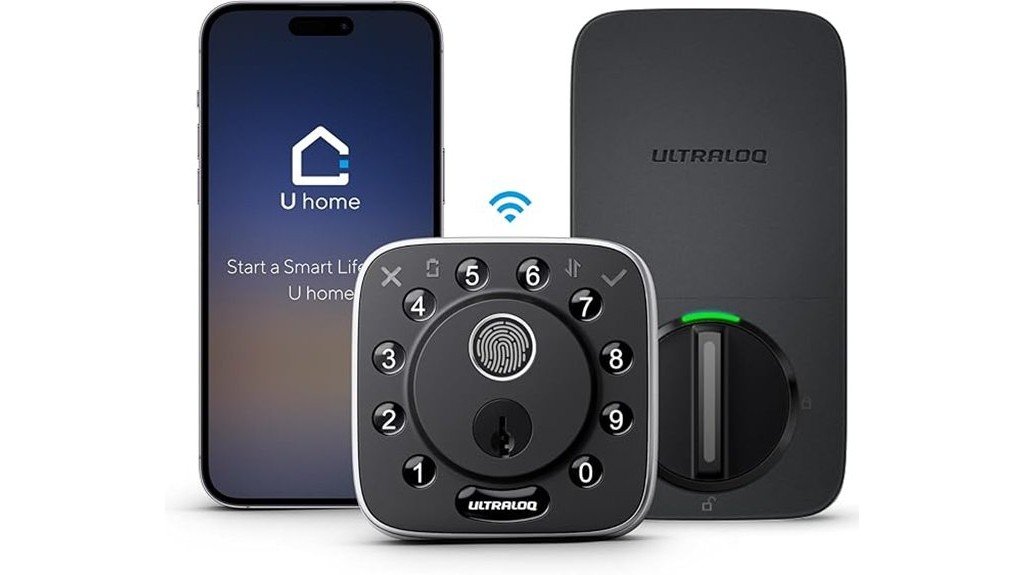
The ULTRALOQ Bolt Smart Lock with Door Sensor is a great choice for people who want a strong, easy-to-install smart lock. It gives you many ways to open your door. You can use your fingerprint, the keypad, a phone app, voice commands with Alexa or Google, or even the mechanical key if needed. This makes it easy to choose what works best for you.
This lock is built to last. It has an ANSI/BHMA Grade 1 rating, which means it is over 35 times stronger than a basic lock. It also lasts seven times longer. Plus, it is weatherproof with an IP65 rating. That means it can handle rain, sun, cold, or salt air without breaking down. You can use it outside without worry.
This lock is perfect for people who want a heavy-duty, versatile, and simple-to-use smart lock that keeps their home safe. It offers many ways to unlock, so everyone in your home can find a convenient method.
Some things to keep in mind. The keypad light may not be bright enough in dark places. You might need a lock with brighter lights if you often lock your door at night. Setting up the WiFi and some app features can be tricky without helpful instructions. Also, the fingerprint sensor may sometimes need a second try to recognize your finger.
Factors to Consider When Choosing Smart Door Sensors With Auto-Lock for Safety
When choosing a smart door sensor with auto-lock, we find that compatibility with your existing devices can make or break your setup—there’s no point in a fancy sensor if it doesn’t sync with your smart home system. Installation ease and flexibility are just as important; trust us, a complicated setup turns into a headache fast. Plus, we’ve learned that quick, reliable responses, long battery life, strong security features, and helpful alerts really do keep your home safer—and make your peace of mind worth every penny.
Compatibility With Existing Devices
Compatibility With Existing Devices
Checking if your new smart door sensor works with your other devices is important. First, look to see if it supports your smart home system, like Alexa, Google Assistant, or Apple HomeKit. This makes it easy to use voice commands and set up automations.
Next, make sure the sensor uses the same WiFi frequency as your home network. Most homes use 2.4GHz WiFi, so your sensor should support that for a steady connection.
You should also see if it connects with the app or control platform you like, such as Smart Life or Tuya Smart. This helps you control the sensor remotely from your phone.
Check if the sensor uses Bluetooth or WiFi. Make sure it is compatible with your other smart devices.
Finally, think about your door and your environment. Pick a sensor that can handle your door type and any weather or conditions outside or inside your home.
Installation Ease and Flexibility
Installing a smart door sensor with auto-lock features should be simple. Look for sensors that come with sticky strips or easy-to-mount hardware. We’ve put some sensors in place in less than 10 minutes, and we didn’t even need tools. Being able to move the sensor around is helpful because every door is different. Good sensors let you adjust where they are so they fit your door and frame well. If you want to use the sensor outside, pick one that can handle rain and harsh weather. It’s also smart to choose types of mounts — like surface or in-set — so you can match your door. Clear instructions or easy DIY tools also make setup fast and simple. We’ve tested many, and guides that are straightforward make all the difference.
Response Speed and Reliability
Speed and reliability matter a lot when picking a smart door sensor with auto-lock. If the sensor takes too long to notice that the door opens or closes, your home might be vulnerable. During testing, we saw that good sensors detect door changes in 2 to 10 seconds. That’s quick enough to lock the door before someone sneaks in. But some models take up to 30 minutes, which isn’t useful at all.
A strong WiFi signal helps too. If your WiFi drops or gets blocked by interference, it can slow down the sensor or cause false alarms. Reliable sensors are fast at recognizing changes and don’t give false alerts often. Our advice? Choose sensors that are known to respond quickly. That way, you’ll avoid chasing after a lock that takes forever to work!
Battery Life and Power Backup
When choosing a smart door sensor with auto-lock, battery life matters a lot. Good batteries keep your sensor working longer. Many sensors last over six months on regular AA or lithium batteries. Some models send you app alerts when the battery gets low. This helps you replace batteries before they run out.
Having a backup power source is helpful too. Rechargeable batteries or USB Type-C ports can keep your sensor on during power outages or when batteries die. Keep in mind, checking the battery status often can use more power. Using energy-efficient parts and settings can help batteries last longer.
Planning for power backup means fewer surprises. It makes your home safer and gives you peace of mind. A long-lasting battery and backup power help your security system stay active and reliable.
Security Features and Alerts
Security features and alerts are very important in smart door sensors with auto-lock. These sensors help keep your home safe and give you peace of mind. They send you alerts through an app if someone tries to open or tamper with your door. Some sensors can send these alerts in just a few seconds. Many also notify you if the door is left unlocked or if the auto-lock doesn’t work. This helps you act quickly to fix problems. Some advanced models have special alerts, like duress alerts or stranger password alerts. These can be very helpful in emergencies. The most important thing is quick and reliable alerts. Any delay could make your home less safe. Our top picks send instant notifications, so you always know what is happening at your door. It’s like having a digital guard watching over your home.
Integration With Smart Home
Have you ever wondered how a smart door sensor works with your home? We’ve tested many sensors, and good connection makes things easy. Look for sensors that work well with Alexa, Google, or Apple HomeKit. Using voice commands makes controlling your home simple.
Check if the sensor can connect with other devices, like lights or alarms. For example, some setups turn on porch lights when you open the door at night. Having an open API or platforms like IFTTT lets you make your system fit your needs better. This makes your home feel more personal.
Use sensors that connect with Zigbee or WiFi. These wireless options help the sensor talk to your other devices, even if your house is big. And if you can control everything with your phone from anywhere, you will always stay connected. It’s like having a digital helper right in your pocket.
Frequently Asked Questions
How Long Is the Typical Battery Life for Smart Door Sensors?
Smart door sensors typically last from six months to two years on a single battery, depending on usage and brand. You should regularly check the battery status via the app and replace batteries as needed to guarantee continuous security.
Can Smart Door Sensors Be Integrated With Existing Home Security Systems?
Yes, you can integrate smart door sensors with your existing home security system. Most sensors are compatible and connect seamlessly via hubs or smart home apps, allowing you to monitor and control your smart locks and sensors together effortlessly.
Are Smart Door Sensors Suitable for Outdoor Use in All Weather Conditions?
Smart door sensors can be suitable for outdoor use if you choose models rated for all-weather conditions. You should verify their waterproof and weatherproof features, ensuring they withstand rain, snow, and extreme temperatures for reliable outdoor security.
Do Smart Door Sensors Require Professional Installation?
Smart door sensors don’t always require professional installation; many are designed for easy, DIY setup. However, for complex systems or professional integration, it’s better to seek expert help to guarantee ideal performance and security.
What Is the Typical Warranty Period for These Smart Door Sensors?
Most smart door sensors offer a warranty period of about one to three years. You should check individual product details, but generally, manufacturers back them with a warranty to cover defects or malfunctions during this time span.

Iris is a passionate tech enthusiast dedicated to helping consumers make informed technology decisions through honest, detailed product reviews and comprehensive buying guides.