
3 Best Smart Door Sensors for Enhanced Home Security
When it comes to securing your home in 2026, choosing the right smart door sensors can feel like steering a maze. We’ve tested models like the ecobee Smart Sensor, which boasts over 58,000 hours of battery life and effortless magnetic mounting, ideal for large gaps. Then there’s the eufy Security Entry Sensor, offering up to 800 days of reliable power and discreet design—all critical for interior doors. Curious how these options stack up or what features matter most? Stay with us—there’s more to uncover.
ecobee Smart Sensor for Doors & Windows 2 Pack for Home Security and Energy Savings
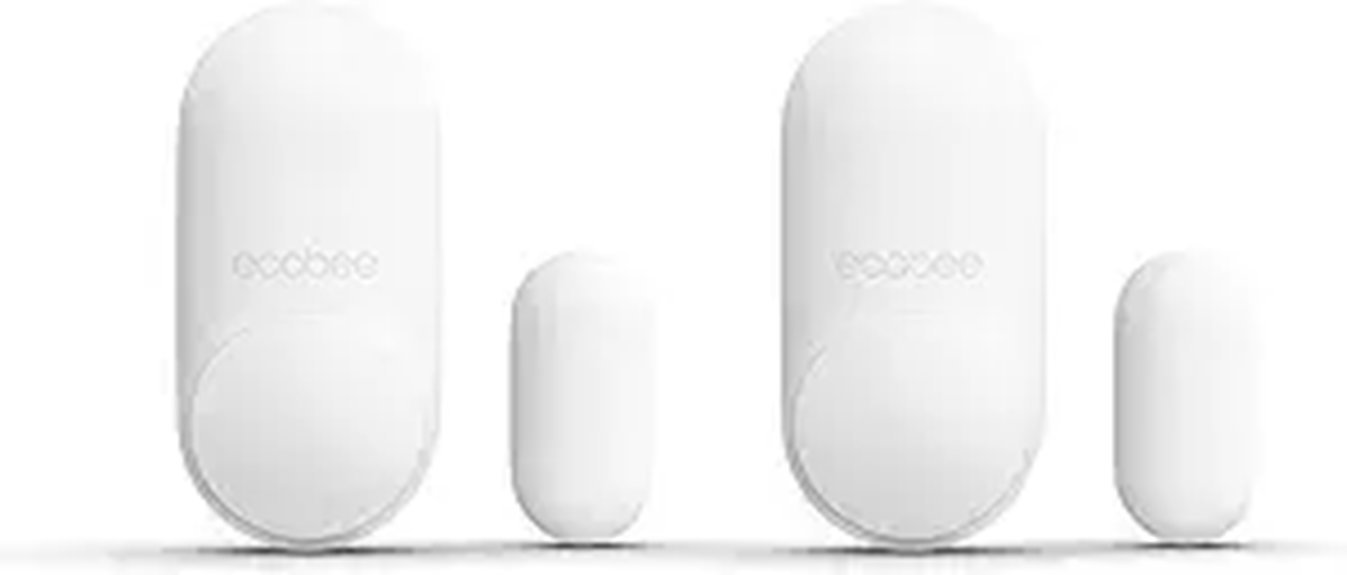
If you want a smart sensor that helps keep your home safe and saves energy, the ecobee Smart Sensor for Doors and Windows 2 Pack is a good pick. If you already use ecobee thermostats or plan to, it works perfectly with them. The magnetic design makes it super easy to install. Just attach it to your door or window, and you’re ready. It can measure the temperature and detect movement within about 16 feet. That’s useful for checking big gaps or large doors.
The sensor sends quick alerts to your app. So, you will know right away if a door or window opens or if there’s movement nearby. It has long-lasting batteries that can last up to 3 years. This means less worry about replacing batteries often. Since it works well with ecobee products, it’s a practical, reliable choice for many homes.
Best For: People who want an easy-to-install sensor to boost security, save energy, and monitor doors, windows, safes, or valuables from anywhere.
Pros:
- Easy magnetic setup for many surfaces and big gaps
- Sends instant alerts about door/window openings and movement
- Long battery life, up to 3 years, so you change batteries less often
Cons:
- You need a subscription for some extra features and alerts
- No loud siren or alarm for intruders
- Temperature readings can sometimes be off or need adjusting
This sensor makes it simple to keep your home safe and save energy. Its magnetic design and long battery life make it a smart and easy choice.
WiFi Door Alarm System, Wireless DIY Smart Home Security Kit
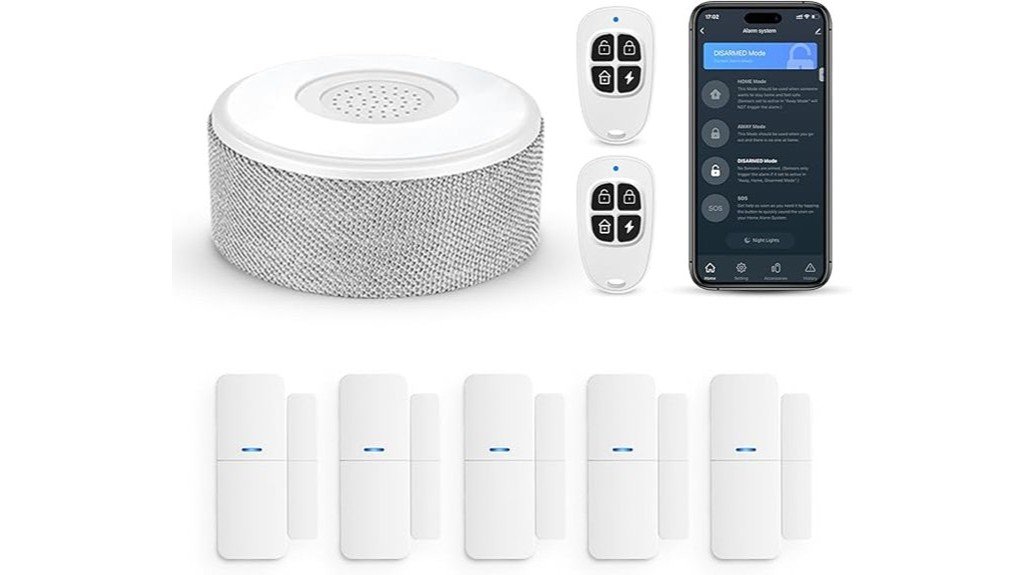
The WiFi Door Alarm System by tolviviov is a good choice for people who want to add home security easily and affordably. It is a DIY kit with 8 parts, including a loud alarm, sensors for doors and windows, and remote controls. You can install it quickly using the sticky backing, with no tools needed. We set it up in about 20 minutes, and it was simple.
This system can handle up to 20 sensors and five remotes. It works with a smartphone app and can connect to Alexa and Google Assistant. Just remember, it only works with 2.4GHz WiFi, not 5GHz. The loud siren and fast alerts are perfect for small homes or apartments, but it might not be best for large houses.
Best For: People living in small apartments or condos who want an easy, affordable security system that works with their phone and voice commands.
Pros:
- Easy to install on your own, no tools needed
- Manage the system with a phone app and control it with Alexa or Google
- Add more sensors or remotes as needed
Cons:
- Only works on 2.4GHz WiFi networks
- Only one user profile; cannot add multiple users
- Better for small spaces; not ideal for big homes, as it has loud sirens and no chime
This system is simple and quick to set up. It’s a good choice for small homes or apartments, especially if you want to stay on a budget.
eufy Security Entry Sensor for Doors and Windows
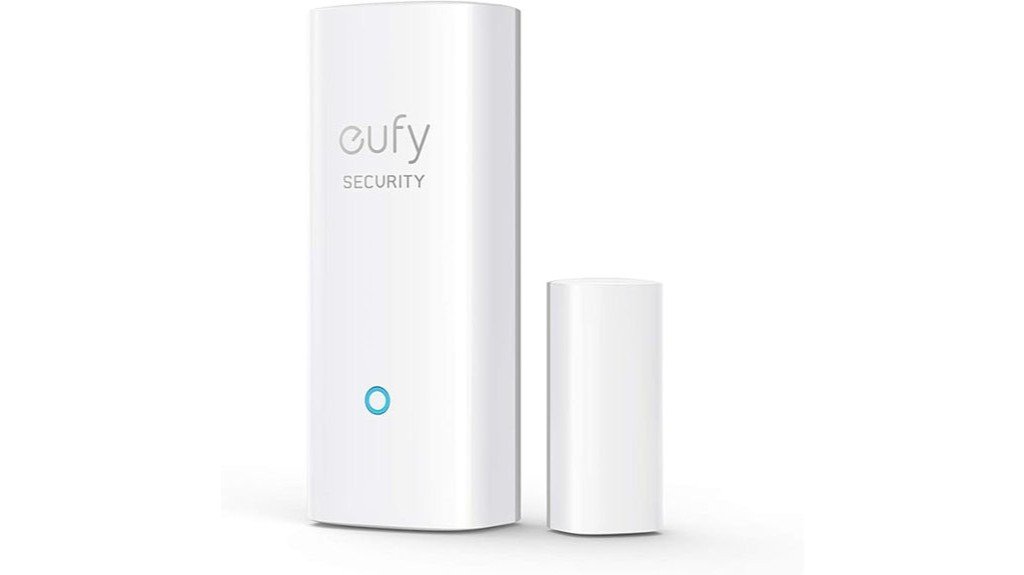
Looking for an easy and reliable way to keep track of your doors and windows inside your home? The eufy Security Entry Sensor is a good pick. It has a battery that lasts a long time—up to 800 days on a single CR123A battery. That means you won’t need to change it often, almost two years without worry. The sensor is small, only about 2.91 inches long and very light at 2.4 ounces. It’s quiet and simple enough to fit on most doors and windows. You can stick it with adhesive or screw it in. We recommend screws if you want it to stay extra secure. When used with the HomeBase hub, it sends alerts fast—within 1 or 2 seconds—so you know right away if something changes.
Best For: Homeowners who want a dependable, long-lasting, and easy door or window sensor for inside the house.
Pros:
- Battery lasts around 800 days on one CR123A battery
- Small size makes it blend in with your home decor
- Fast alerts that arrive in 1-2 seconds
Cons:
- Does not work directly with some smart home systems like Apple’s HomeKit or August
- No built-in doorbell or chime feature unless the system is armed
- Magnet and sticky mount might need extra help on porous or non-metal surfaces
This sensor is simple to install and use, making it a good choice for many homes. It keeps you safe without needing frequent changes or complicated setup.
Factors to Consider When Choosing Smart Door Sensors for Security
When choosing smart door sensors, you’ll want to consider compatibility with your existing security system because a mismatch can turn your setup into a paperweight. Flexibility in sensor placement and notification options are essential—after all, who wants alerts that are too late or too loud at the wrong time? And don’t forget about battery life; a sensor that runs out of juice in a week isn’t doing much to keep your home safe.
Compatibility With Systems
Making your smart home work well takes checking if your door sensor fits with your system. First, see if it works with Alexa, Google Assistant, or Apple HomeKit. You don’t want a sensor that acts like it’s on its own.
Next, check if the sensor connects with Wi-Fi, Zigbee, or Z-Wave. This helps you make sure it works with your hub. Some sensors also need a special hub or controller. That means more cost or things to set up.
Look at how the sensor connects. Does it use an app, Bluetooth, or magnets? Make sure it matches your home network. Doing this simple check keeps surprises away later.
Sensor Placement Flexibility
Choosing where to place your smart door sensors is important. You shouldn’t just put them anywhere. Instead, think about the best spots to keep your home safe.
The space between the door or window and its frame matters a lot. Sensors with a longer range can cover bigger openings. This means you don’t need to add extra sensors. Magnetic contact sensors work best when the magnet is close to the sensor—within half an inch. If they’re tilted or far apart, they might not work properly.
You can use different mounting options, like sticky adhesive or screws. This helps you attach sensors to different surfaces, such as metal, wood, or plastic. Choosing the right type of mount makes it easier to change your doors or walls later.
It’s smart to put sensors at main doors or hallways. These are the most visited spots. Placing sensors there gives you good coverage. It makes it easier to know if someone opens your door.
Notification and Alert Types
Have you ever thought about how a small notification can keep your home safe? We tested different types of alerts from sensors. Some send a quick push message to your phone, while others make loud sounds or flashing lights. When a sensor sends a message straight to your phone, you get instant updates. This helps you react right away. You can also pick what kind of alert you want. For example, you can choose a chime sound or set the volume of an alarm. This way, alerts don’t get annoying or disturb your house too much. Some sensors can do more. They might turn on a light or set off an alarm when they detect something. This makes your home even safer. But remember, how well these alerts work depends on how your sensor connects to the internet. They can use Wi-Fi, Bluetooth, or Z-Wave. If the connection is strong, the alerts work better. A good alert system is the first step to keeping your home safe.
Battery Life and Maintenance
Battery life is an important part of smart door sensors. Good batteries mean fewer changes, which keeps your home safe. Most sensors use quick and easy-to-replace lithium batteries. These usually last 2 to 3 years. How often your door opens or closes can change how long the battery lasts. Some sensors have special parts that save energy and make batteries last even longer. Many sensors send you alerts when the battery gets low. These alerts help you know when it’s time to change the battery. Changing batteries should be simple and quick. The best sensors make it easy to swap batteries without using tools. A sensor with long battery life and simple maintenance is worth buying. Dead batteries can leave gaps in your home security. So, choose sensors that are reliable and easy to keep running.
Integration and Automation
Have you ever wondered how your smart door sensor can work with your home system? To do that, you need to check if it works with platforms like Apple HomeKit, Alexa, or Google Assistant. When your sensor connects well, you can set up things like turning on lights or changing the thermostat when the door opens. This makes your home smarter and easier to control.
Some sensors let you create special rules. For example, you can set your alarm to arm itself automatically at night. Using hubs or controllers helps all your devices talk to each other smoothly. You can also get alerts that suit your needs. For example, you can get notified when someone opens your door. This helps you stay safe and saves time.
Once everything connects, your home can run on its own. It’s like having a smart home that thinks and acts for you.
Installation Process Ease
Choosing a smart door sensor that’s easy to put up saves time and avoids frustration. Sensors that stick on with adhesive are quick and simple. They can be in place in less than five minutes. Sensors that need screws and a drill take longer and may need more tools. Magnetic contact sensors are easy—just line them up, stick them on, and you’re done. No tools needed. Many sensors come with clear instructions and don’t need much wiring. You can install them fast, even if you’re not a tech expert.
Think about what surfaces you have. Drywall and wood are easy to work with. Porous materials might need extra reinforcement. Wireless sensors with simple mounting options are usually the best for beginners. Look for models that come with easy-to-follow instructions and quick ways to set them up. This will make your installation smooth and stress-free.
Frequently Asked Questions
How Do Smart Door Sensors Integrate With Existing Home Security Systems?
You connect smart door sensors to your existing security system via Wi-Fi or Z-Wave, allowing seamless communication. They send alerts, activate alarms, or trigger cameras automatically when doors are opened or closed, enhancing your home’s security.
What Is the Average Lifespan of a Typical Smart Door Sensor?
A typical smart door sensor lasts about 3 to 5 years, depending on usage and quality. You should regularly check batteries and firmware updates to guarantee peak performance, replacing sensors when performance declines or they malfunction.
Are Smart Door Sensors Compatible With Voice Assistant Platforms?
Yes, smart door sensors are compatible with voice assistant platforms like Alexa, Google Assistant, and Siri. You can easily control and monitor your door sensors using voice commands, enhancing your home’s security and convenience seamlessly.
How Secure Are Smart Door Sensors Against Hacking or Cyber Threats?
Smart door sensors generally have good security, but you must keep firmware updated, use strong passwords, and enable two-factor authentication to prevent hacking. Staying vigilant guarantees your home remains protected against cyber threats effectively.
Can Smart Door Sensors Be Easily Relocated Without Professional Help?
Yes, you can relocate smart door sensors yourself if you follow manufacturer instructions. Typically, you’ll need to detach them carefully, choose a new spot, and reattach, ensuring the sensor’s alignment and connectivity remain intact for proper functioning.

Iris is a passionate tech enthusiast dedicated to helping consumers make informed technology decisions through honest, detailed product reviews and comprehensive buying guides.