
3 Best Outdoor WiFi Thermometers for Weather Monitoring
If you’re serious about tracking outdoor weather with WiFi, we’ve tested the top models for 2026, and some stand out more than others. From the expansive Sainlogic WiFi Weather Station with its 330-foot sensor range, to the Swiss-made accuracy of the Indoor/Outdoor Thermometer Hygrometer, and the all-encompassing Sainlogic SA9 Plus featuring UV, wind, and rain sensors—each has its perks. But which really fits your yard and needs best? Stick with us as we unpack the details and give you the inside scoop on what makes these units excel—or fall short.
Sainlogic WiFi Weather Station with Rain Gauge & Wind Speed
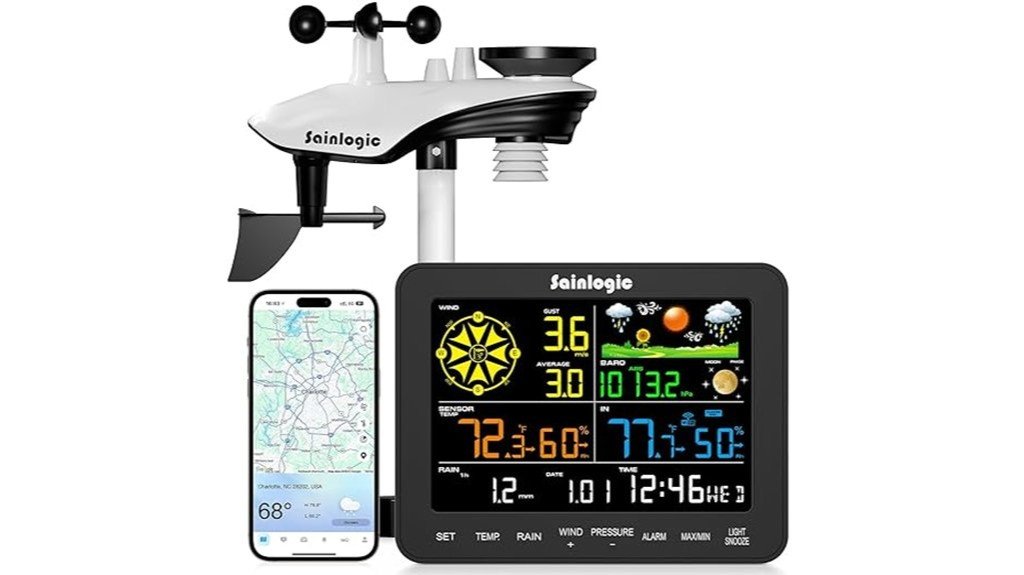
If you want a weather station that’s easy to set up but still gives you accurate info, the Sainlogic WiFi Weather Station is a good choice. It’s simple to install using the Weatherseed app. The outdoor sensors are tough and weatherproof. They can send data from as far as 330 feet, so you can cover a big yard or property.
The display is bright and colorful. The large fonts make it easy to read from across the room. It shows important info like wind speed and rain, with bold numbers for quick glances. Whether you like gardening or just want to keep an eye on the weather, this device is reliable and precise.
This weather station is great for beginners, outdoor lovers, and gardeners. It’s straightforward to use and gives professional-level data.
Pros:
- Easy to set up with the simple Weatherseed app.
- Durable outdoor sensors that work well in bad weather.
- Bright, colorful display with big fonts for easy reading.
Cons:
- Sometimes, WiFi connection drops and can stop sending data.
- Sensor readings may not always be perfect in bad weather.
- The app can be slow to update data at times.
This weather station makes weather tracking simple and practical. It’s a helpful tool for anyone who wants quick, clear weather info in a friendly way.
Indoor Outdoor Thermometer Hygrometer Wireless Weather Station with Remote Sensor
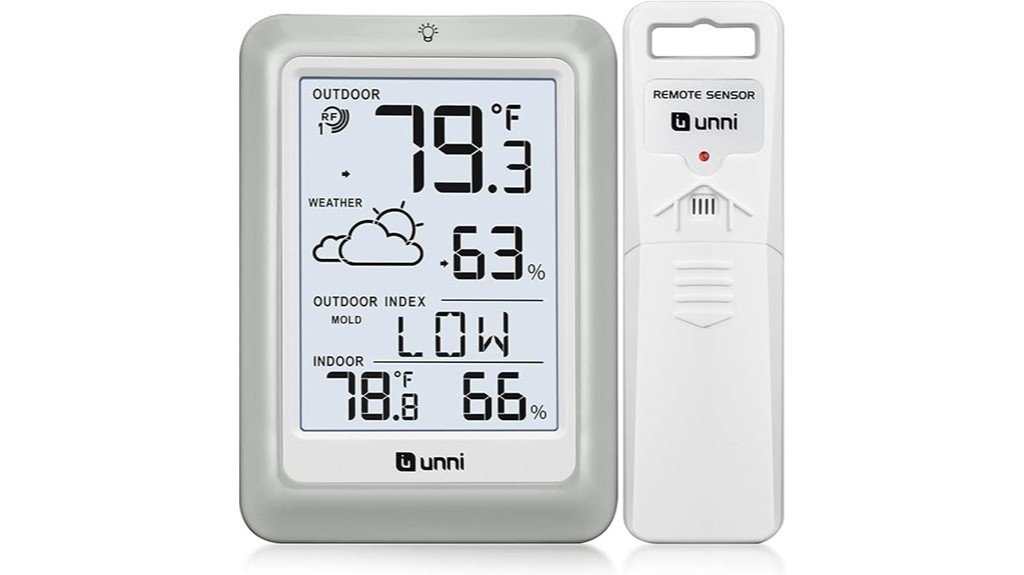
Want to keep an eye on the weather at home and outside? The U UNNI wireless weather station is a great choice. It tracks temperature, humidity, dew point, and mold levels. The sensors are made in Switzerland and are very accurate. Inside, it can measure from 14.2ºF to 122ºF. Outside, it works from -58ºF to 158ºF.
The display is big and has a backlight. You can see the readings clearly, even in the dark. The station can connect to up to three sensors. This helps you monitor different spots around your house or yard.
Setting up the weather station is easy. It works well and gives you real-time weather forecasts. The sensors need a day or two to settle after you install them. The batteries don’t come with the station. You will need to replace them every 2-3 months. Some users say that after a long time, the sensors might stop working and need replacing.
Who is this good for? Homeowners, gardeners, and office workers who want accurate indoor and outdoor info. The clear display and wireless setup make it simple to use.
Pros:
- Very accurate sensors from Swiss-made technology
- Big, bright screen that’s easy to read
- Supports up to three sensors for different locations
Cons:
- Sensors take a day or two to give stable readings
- Batteries are not included and need replacement often
- Some sensors might stop working after a long time
This weather station helps you stay informed and comfortable. It’s easy to use and reliable for everyday weather checks.
Sainlogic SA9 Plus WiFi Weather Station with Outdoor Sensors
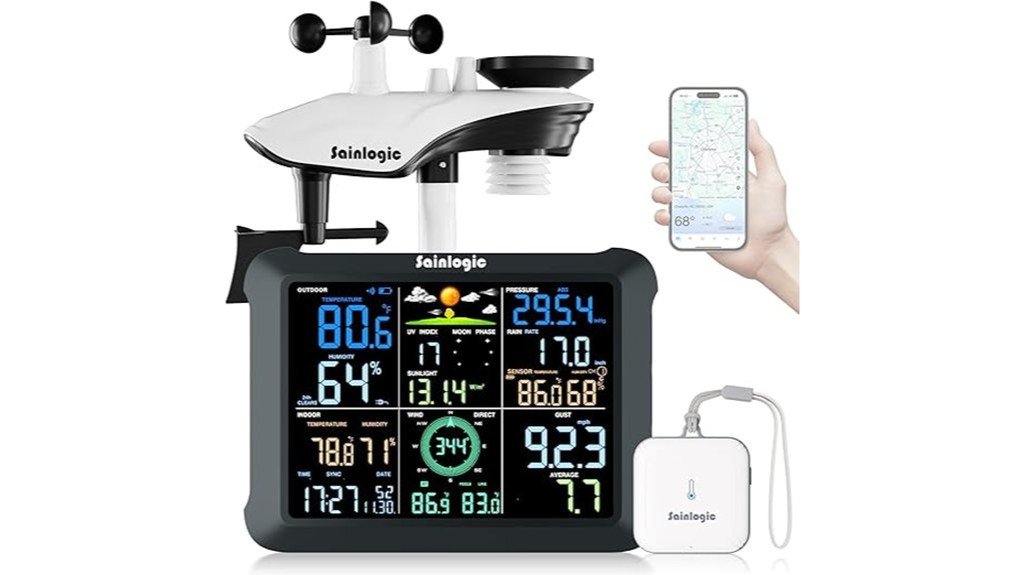
The Sainlogic SA9 Plus WiFi Weather Station is a great choice for anyone who wants accurate weather data right in their backyard. Whether you put it outside, in a greenhouse, or even in an RV, it works well. We tested it, and it’s easy to use. It has a bright 8.5-inch screen that shows all the weather info clearly. The outdoor sensor measures things like UV rays, sunlight, wind speed and direction, rainfall, temperature, humidity, and air pressure. These readings are very precise, like lab tests.
The weather station connects to WiFi within about 250 to 330 feet. This means you can check your weather data from a distance, even if your property is large. You can also export the data and set up alerts for specific weather conditions. It’s perfect for weather fans, greenhouse owners, or anyone who wants detailed outdoor climate data they can trust.
Pros:
- Very accurate measurements for temperature, humidity, wind, rain, and pressure
- Large, bright screen that is easy to read, with a backlight you can turn on
- Good WiFi connection up to 330 feet, with simple app use and data sharing options
Cons:
- Setting up the outdoor sensor may take some work and effort to position right
- It works mainly with Weather Underground, so it has limited smart home compatibility
- Installing the outdoor sensor can be tricky in areas with strong wind or limited space
This weather station gives you clear, precise info about the weather. It’s a useful tool for anyone who wants to keep an eye on outdoor conditions easily and accurately.
Factors to Consider When Choosing Outdoor WiFi Thermometers for Weather
When choosing an outdoor WiFi thermometer, you’ll want to think about its connectivity range—most devices work best within 100-300 feet, but walls and obstacles can cut that down quickly. Measurement accuracy is essential; after personally testing several models, I’ve found that a variation of ±0.2°F really makes a difference in planning outdoor activities or gardening. Don’t forget to check if the display is easy to read from across the yard and if the sensors are built to withstand weather elements—trust me, rust and cracked screens are no fun!
Connectivity Range
Connectivity range is very important when choosing an outdoor WiFi thermometer. The range can be from 100 to 330 feet. This depends on the device and your surroundings. We tested different models. A longer range lets you put the sensor farther from your WiFi router. This makes outdoor setup easier. Keep in mind, things like walls, trees, and metal objects can block the WiFi signal. Sometimes, even in your yard, the signal may reach only 150 feet because of interference. A thermometer with a strong, stable range helps you get weather data without gaps. It makes sure your data comes in on time. Our advice: pick a thermometer that has at least 200 feet of range. This is especially good if your yard is large or has many obstacles.
Measurement Accuracy
Even the best outdoor WiFi thermometers can give wrong data if they’re not accurate. Usually, good readings stay within about ±0.5°F (±0.28°C) for temperature. For humidity, reliable sensors are within about 2%. If you want more precise data, look for sensors that can detect temperature changes as small as 0.1°F. That way, you’ll see tiny weather changes more clearly. Rainfall sensors are usually accurate within ±1mm for small amounts under 15mm. For bigger rain, they are correct within about 7%. Wind sensors give good readings within ±1-2 mph, helping you see gusts clearly.
Display Visibility
Good readability is really important for your outdoor WiFi thermometer. When you check the weather data from far away or in bright sunlight, a clear display helps you see the information quickly. Large, high-contrast fonts make it easy to read without squinting. An adjustable backlight is helpful if you look at the thermometer late at night or early in the morning. It makes sure you can see the display clearly without straining your eyes.
The design of the enclosure matters too. A good cover reduces glare and reflections, so the screen is easier to read from different angles. Tilting the screen at the right angle and choosing a display with bold, color-coded data makes it faster to understand the weather info. When your weather station has a well-designed display, it feels like you have a secret weather superpower. It makes checking the data simple, fast, and stress-free.
Sensor Durability
Since outdoor weather sensors face tough conditions, it’s important to pick WiFi thermometers with strong, weather-proof covers. Sensors with an IP65 rating keep dust out and resist water jets. That’s perfect for bad weather. Materials like stainless steel, sealed plastics, and anodized aluminum are good choices. They can handle rain, snow, and bright sunlight without rusting or breaking down.
During testing, sealed parts and corrosion-resistant features stopped moisture from building up. This keeps readings accurate over time. Be careful with sensors that show sensitive parts. They can crack or stop working after some seasons. A good rule is to pick models that are protected from direct weather but still tough enough for cold and heat.
A sensor that lasts longer saves you time and money. It might cost a little more but it’s worth it. Choose one that can stand the weather. That way, you keep your weather info reliable and avoid frequent replacements.
App Compatibility
When you pick an outdoor WiFi thermometer, it’s important that the app works well with your phone. Whether you use an iPhone or an Android phone, the app should be easy to set up and use. Make sure it gives updates in real time, so you see the latest data right away. Look for apps that keep a record of past data too. This helps you look at weather patterns over days or months.
If you need to check more than one place, see if the app can handle multiple sensors. That way, you don’t have to switch between different apps. Also, check if you can save data as a CSV or Excel file. This makes it easier to track long-term changes.
Choose an app that has simple, clear visuals. It should be easy to understand what the numbers mean. The app should be user-friendly so you spend less time figuring it out and more time learning about the weather.
Installation Ease
Installing an outdoor WiFi thermometer can seem easy, but a little planning helps a lot. Choose models that come with clear instructions. This makes the setup faster and simpler. Pick devices with wireless sensors. You can put these sensors on fences, poles, or roofs without needing special wiring. Make sure the sensors are weatherproof. They need to handle rain, wind, and sun. This way, you won’t have to move them often. Check the manufacturer’s tips. Follow their advice on where to place the sensors for better WiFi signals and accurate readings. Light sensors with flexible mounting make installation easier. Based on my experience, choosing simple and durable sensors makes setting up outdoor weather tools much smoother and more fun.
Data Storage Options
Choosing the right storage for your outdoor WiFi thermometer is important. It helps you see weather data clearly and keep it safe.
Some thermometers use cloud storage. This means your data is saved online. You can get to it from anywhere and see your weather info on your phone or computer. If you go on trips or don’t have internet all the time, the cloud makes it easy to check your weather remotely.
Other thermometers have local memory. That means they store data right on the device, inside. Some have small storage, just enough for a few months. Others store data for up to two years. Some can back up their data automatically or let you export it as a CSV or Excel file. This is good if you want to keep long-term records.
Some models use both cloud and local storage. That way, you can access data when you’re offline and also get remote updates. If you plan to do a lot of weather tracking, find a model with expandable storage. It lets you add more space if needed.
Frequently Asked Questions
How Accurate Are Outdoor Wifi Thermometers Compared to Professional Weather Stations?
Outdoor WiFi thermometers generally provide accurate readings within a few degrees, but they rarely match professional weather stations’ precision. Factors like placement, calibration, and build quality influence their accuracy, so use them for general estimates rather than critical measurements.
What Is the Typical Battery Life of These Outdoor Wifi Weather Devices?
You’ll usually get about six months to a year of battery life from outdoor WiFi weather devices, depending on usage and features. Regularly check and replace batteries to guarantee uninterrupted weather monitoring.
Can These Thermometers Withstand Extreme Weather Conditions?
You can find outdoor WiFi thermometers designed to withstand extreme weather, thanks to rugged, weatherproof materials like IP67 or IP68 ratings. These features guarantee your device stays functional even in harsh conditions, providing reliable weather data.
How Secure Is the Data Transmission From Outdoor Wifi Weather Stations?
Your outdoor WiFi weather stations securely transmit data using encryption protocols like WPA2 or WPA3, ensuring your information stays protected from unauthorized access, so you can trust that your weather data remains confidential and safe.
Are There Specific Apps Recommended for Monitoring Multiple Weather Stations?
Yes, you should consider apps like WeatherLink, WeatherCloud, or Netatmo, which efficiently monitor multiple weather stations simultaneously, offer real-time updates, and provide user-friendly interfaces, making weather tracking seamless and all-inclusive.

Iris is a passionate tech enthusiast dedicated to helping consumers make informed technology decisions through honest, detailed product reviews and comprehensive buying guides.