3 Best Bluetooth Trackers for Bikes to Keep Your Ride Secure in 2026
When it comes to keeping your bike secure in 2026, choosing the right Bluetooth tracker isn’t just about a small device—it’s about reliability, durability, and seamless connection. We’ve tested models with weatherproof ratings up to IP67, lasting over six months on a single charge, and offering ranges of up to 400 feet through crowd networks. From experience, a tracker that syncs with your phone quickly and emits a loud alarm makes all the difference. Curious about which options stand out now?
Bike Tracker for Android, Compatible with Google Find My Device

If you want a bike tracker that works easily with your Android phone, the Bike Tracker compatible with Google Find My Device might be the right choice. This tiny device measures only about 1.26 inches square and weighs around 3.2 ounces. It’s small enough to attach to your bike or any valuables. The tracker uses Google’s crowd network, with over a billion Android phones helping find your bike every 3 to 30 minutes.
It has good features. The device has a loud alarm that reaches 90 decibels, is waterproof so it can handle rain or dirt, and has a long battery life of up to 365 days. You just replace the CR2032 battery when needed. It’s easy to set up and use if you have an Android phone. Plus, it’s small and light, so it fits well on bikes or other things.
However, some users say the device can be unreliable sometimes. They mention problems with Bluetooth connection or doing factory resets. Others feel that support responses can be slow or not helpful. Overall, it has mixed reviews, but for its price and features, it can be a good option for tracking bikes.
Best For: People who have Android phones and want a simple, waterproof bike tracker with a long battery life and crowd-sourced location updates.
Pros:
- Easy to set up with Google Find My Device.
- Small, light, and waterproof.
- Battery lasts up to a year and is easy to replace.
Cons:
- Some users have connection issues.
- Factory resets may not always work well.
- Support and reliability reviews are mixed.
Orbit Velo Advanced Bike Tracker with Apple Find My
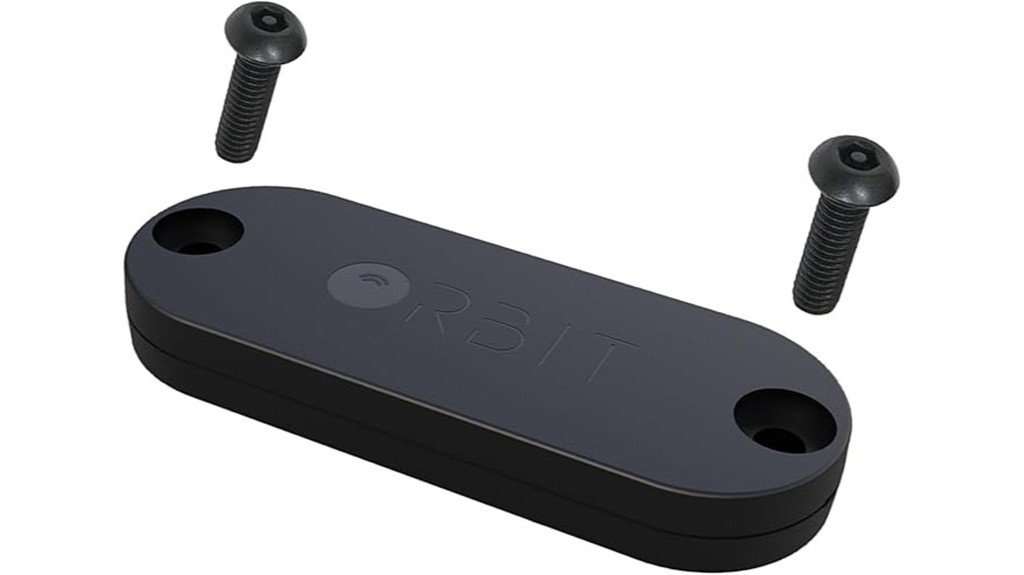
The Orbit Velo Advanced Bike Tracker works great with Apple Find My. It’s a good choice for cyclists who use Apple devices. The tracker is easy to put on your bike. You just tighten the security bolts with the tool that comes in the box. Once installed, you can track your bike easily through the Apple Find My app. The tracker is small and light—only 2.12 ounces—and it measures about 3 x 1.1 x 0.37 inches. It fits discreetly on your bike and doesn’t get in the way. It is also waterproof with an IPX6 rating, so it can handle rain and bad weather. Many users say it helps stop thefts and can help you find your bike if it gets stolen.
Best For: People who want easy Apple device integration, strong security, and a small, hidden tracker.
Pros:
- Easy to install with the included tools
- Works smoothly with Apple Find My network
- Reliable GPS makes tracking accurate
- Waterproof and built to last outside
Cons:
- Some users need to change batteries sooner than expected
- Tracking can sometimes be slow by up to 30 minutes
- Security screws might be easier to remove without extra tamper-proof parts
This tracker is a simple way to protect your bike. It’s small, waterproof, and works well with Apple devices. If you want an easy and effective way to keep your bike safe, the Orbit Velo Advanced Bike Tracker is a solid choice.
TopMade Bike Tracker with Apple Find My Compatibility
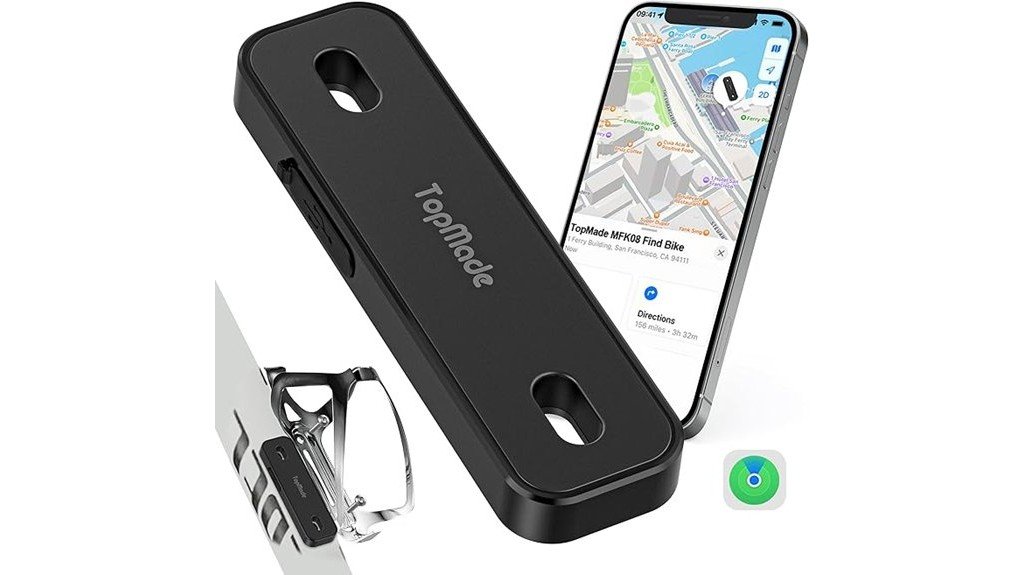
If you use Apple products and ride bikes, the TopMade Bike Tracker is a great choice for 2026. It works perfectly with iPhones, iPads, Macs, and Apple Watches. You can see where your bike is on the Find My app. The app gives you real-time updates, sounds alerts, and sends you notifications if you forget your bike nearby.
The tracker can find your bike even if it’s outside Bluetooth range—up to 50 meters—by using Apple’s big Find My network. This network uses hundreds of millions of devices to help locate your bike. The tracker’s battery lasts about four months on one charge. It’s also IP67-rated, which means it is waterproof and dustproof. So, it can handle different weather conditions.
A quick tip: check your battery often so it doesn’t run out when you need it.
Best for: Apple fans and serious cyclists who want a reliable, weatherproof tracker that works well with their Apple devices.
Pros:
- Easy to use with the Apple Find My app
- Up to four months of battery life
- Waterproof and dustproof design
Cons:
- Only works with Apple devices, not Android
- Bluetooth range is limited to 50 meters
- You need to check the battery regularly to keep it working
The TopMade Bike Tracker makes bike security simple for Apple users. It keeps you updated, is durable, and easy to use. But remember, it’s best for people with Apple gadgets.
Factors to Consider When Choosing Bluetooth Trackers for Bikes
When choosing a Bluetooth tracker for your bike, you’ll want to consider how well it works with your devices—some sync with just phones, while others integrate with GPS systems. We’ve tested trackers with ranges from as short as 100 feet to over 300 feet, so the right one depends on how far you’re comfortable being from your bike. Finally, don’t overlook battery life—nothing’s worse than a tracker that dies right when you need it most—plus, weatherproofing and sturdy mountings make sure it survives your rides, rain or shine.
Compatibility With Devices
Choosing a Bluetooth tracker for your bike means making sure it works well with your phone. Check if it fits your device, like Android or iPhone. If your phone is running Android 9 or newer, make sure the tracker supports that. The same goes for iPhones with iOS 14 or higher.
The tracker should use Bluetooth 4.0 or a newer version. Older versions can cause weak signals or quick disconnects. Some trackers can connect with Apple’s Find My or Google’s apps. This makes finding your bike easier.
Think about your bike accessories too. Will the tracker fit your mount? When buying, double-check that it works with your phone’s version. This way, you won’t end up with a tracker that doesn’t sync with your device.
Range and Signal Strength
Range and signal strength are important for Bluetooth trackers. Inside, the range is about 30 to 100 feet. Outside, it can go up to about 330 feet. Thick walls, metal objects, or trees can weaken the signal. We tested trackers that lose connection after just a few yards or crossing a driveway. If you want to find your bike quickly while riding, a longer range helps. Some trackers only use Bluetooth. That means once you’re out of range, they stop working. A good idea is to choose trackers that use crowd networks. These networks bounce signals off other phones nearby, helping you find your bike even if it’s out of Bluetooth range. Good range and strong signals make it easier to keep track of your bike and avoid surprises.
Battery Longevity and Power
Battery life really matters for Bluetooth bike trackers. Some last just a few months, and others can go for years without needing a charge. This means less fuss and fewer times you have to stop to recharge. Many trackers use small batteries called CR2032. These batteries are easy to swap out and you can find them in stores easily.
Newer tech helps save battery power. For example, low-power chips and smart software keep energy use low without making the tracker less useful. Some trackers have rechargeable batteries that last months between charges. Just remember, you’ll need to recharge them regularly.
How you ride also affects battery life. If your tracker sends signals often or turns on alarms a lot, it will drain the battery faster. Bluetooth strength also plays a role. If the signal is strong, it uses more power.
From my experience testing many trackers, I’ve learned that a long-lasting battery makes riding easier and more fun. You won’t have to worry about charging all the time, and your tracker stays reliable during your rides.
Durability and Weatherproofing
If you want to keep your bike tracker safe from bad weather, durability and weatherproofing are very important. Look for trackers with an IP67 rating or higher. This means the tracker keeps out dust and can handle heavy rain or even quick water dips. It’s great for mountain rides or sudden rainstorms.
Strong materials like good plastics or metals make the tracker tough. They help it resist shocks and vibrations from rough trails. Some trackers can even handle very cold mornings or hot summer days without losing their accuracy. Sealed cases help keep out moisture and dust, which helps the tracker last longer.
Attachments that are reinforced and parts that resist rust keep your tracker connected and working, even when you ride hard. Before you put the tracker on your bike, always check these features. This way, your tracker stays safe and works well, no matter how tough your ride gets.
Attachment and Mounting Options
Choosing how to attach your bike tracker is important. You want it to stay secure but also be easy to use. Some trackers use security bolts. These bolts make it harder for someone to steal your tracker. Other trackers use adhesive mounts. These stick well and don’t fall off easily, but they can be a little tricky to remove when you want to take it off.
You can also find different accessories like brackets or straps. These help you attach the tracker to different parts of your bike. For example, you can put it under the seat or on the handlebar. Make sure the mounting method works well with your bike’s frame. A bulky mount may not look good on a sleek road bike.
Look for mounts with quick-release features. These let you take off the tracker easily when you park or do maintenance. Durability is also key. Weather-resistant mounts stay strong in rain or shine. They can handle vibrations and dust too.
Choosing the right mounting option keeps your tracker safe and makes it simple to use.
Alarm Loudness and Alerts
Think about the last time you tried to find your bike in a busy parking lot. It wasn’t easy, right? That’s why alarm loudness and alerts are important. A good tracker can have a loud sound, up to 90 decibels. This loud alarm helps you hear it even if there’s noise or a crowd. Some trackers let you set the volume lower. That’s useful if you’re in a quiet place like a library or neighborhood. Many alarms make sound and vibrations at the same time. This way, even if you don’t hear the noise, you can feel the alert. Some trackers have longer alarm sound times or can trigger multiple times. This makes it easier to find your bike quickly. A good alarm is loud and smart. It helps protect your bike and keeps you from stressing out if you can’t find it.
Network Coverage and Accuracy
Even if your bike is locked tight, finding its location depends on how well your tracker can connect. Bluetooth trackers work up to 160 feet inside a building, but outside, they don’t reach that far. So, don’t expect perfect guesses over long distances.
Network coverage matters a lot. Some trackers use crowdsourced networks like Apple’s Find My or Android’s network. These networks help locate your bike even when it’s out of Bluetooth range. We tested trackers that give location updates within about 20 feet. That’s helpful, but the accuracy can change based on how many devices are nearby.
In areas with few nearby devices, updates may slow down or stop. This makes it harder to find your bike. The best trackers connect easily to big networks and work well in your riding area.
Pro tip: The more your tracker can connect to other devices nearby, the better your chances of finding your bike fast.
Ease of Installation
Easy installation is very important when choosing a bike tracker. If it’s hard to set up, you might get frustrated and not use it. Look for trackers that come with mounting parts like screws, adhesive pads, or quick-release clips. These make attaching the tracker simple and quick. Light trackers that weigh less than 3 ounces are easier to carry and don’t feel heavy while riding. Some trackers have universal mounts or quick-release features that help you install them in seconds. Clear instructions also make setup easier for everyone. Waterproof ratings like IP67 or IPX6 mean the tracker can handle rain and splashes without extra work. Overall, a simple setup gets you ready to ride faster and keeps you focused on your ride, not on fixing things.
Frequently Asked Questions
How Long Do Bluetooth Trackers Typically Last on a Single Charge?
Bluetooth trackers usually last between a few days to a few months on a single charge, depending on usage and power-saving features. You should recharge or replace the battery regularly to keep your bike secure and always trackable.
Are Bluetooth Trackers Theft-Proof or Tamper-Resistant?
Bluetooth trackers aren’t theft-proof or tamper-resistant; determined thieves might disable or remove them. However, their subtle presence can deter theft and help recover your bike, especially when combined with other security measures.
Can Bluetooth Trackers Be Used on Other Vehicles Besides Bikes?
Yes, you can use Bluetooth trackers on other vehicles like scooters, motorcycles, and even cars. They help you keep track of your vehicle’s location, making it easier to find if it gets misplaced or stolen, offering added security.
What Is the Average Range of These Bluetooth Bike Trackers?
You’ll find that Bluetooth bike trackers typically have an average range of about 100 to 200 feet, depending on the model and environment. To stay connected, keep your device within this distance for reliable tracking.
Are There Subscription Fees for Premium Tracking Services?
Some Bluetooth trackers might offer optional subscription services for premium features like extended range or real-time alerts, but many do not require any fees. You should check each product’s details to see if subscriptions are necessary.

Iris is a passionate tech enthusiast dedicated to helping consumers make informed technology decisions through honest, detailed product reviews and comprehensive buying guides.