
3 Best Smart Motion Sensors for Pets in 2026
When choosing the best smart motion sensors for your pets in 2026, it’s essential to find devices that strike a balance between sensitivity, reliability, and ease of installation. We’ve tested options that detect movement across wide angles—up to 170°—and last up to five years on a single battery. Proven features like pet-friendly zones and false alarm prevention can save you stress. Curious how these gadgets can seamlessly fit into your home security? Keep going to discover the top picks that keep your furry friends safe, sound, and happily monitored.
Aqara Zigbee Motion Sensor P1 (3 Pack)
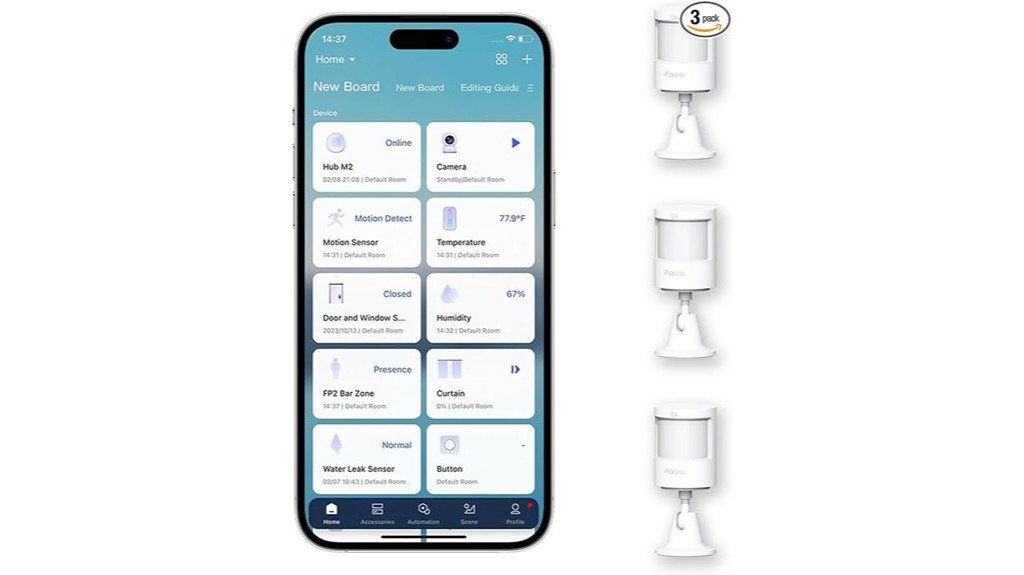
If you want a smart motion sensor that works well and is pet-friendly, the Aqara Zigbee Motion Sensor P1 (3 Pack) is a good choice. It is small, with a diameter of just 1.46 inches, so it can hide easily or fit into tight spots. The battery lasts up to five years, so you won’t need to change it often. It has adjustable detection angles—up to 170° for 4 meters or 150° for 7 meters—giving you flexible placement options. Just remember, it needs an Aqara Zigbee 3.0 hub, and it’s a good idea to update the firmware for the best performance.
Best For: People who want a reliable, pet-friendly motion sensor to help with home security and automation. It’s great for long-term use because of its long battery life.
Pros:
- Small and discreet, fits in tight or hidden spots
- Battery lasts up to five years
- Adjustable detection angles and sensitivity for better coverage
Cons:
- Needs an Aqara Zigbee 3.0 hub. It doesn’t work with other Zigbee hubs or third-party devices
- Must be within 10 meters of the Zigbee hub for good connection
- Firmware updates are recommended. This adds an extra step during setup
This sensor is simple to install and easy to use. Its small size makes it barely noticeable in your home. The long-lasting battery saves you time and effort. With adjustable settings, you can set it up just how you want. Just keep in mind, you need the right hub and a good connection to enjoy all the features. Overall, it is a practical and reliable motion sensor for your smart home.
blurams 2K Indoor Security Camera with Motion Tracking & 2-Way Audio
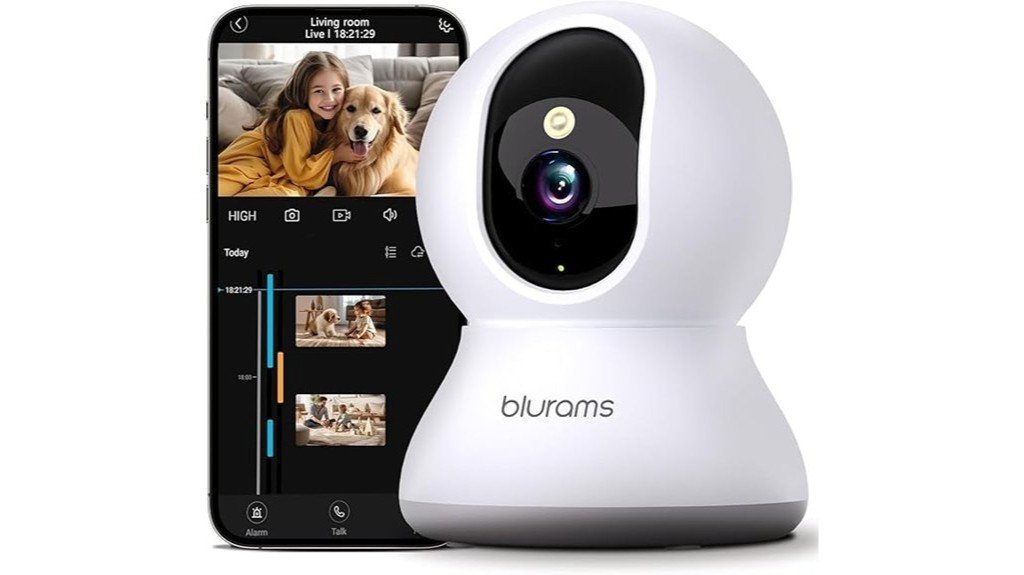
The blurams 2K Indoor Security Camera is a good choice for pet owners who want to keep an eye on their home. It has a motor that can turn and zoom, giving you a full 360° view. That means no blind spots! The camera shows clear video in 1440p HD, so you can see fine details even when you zoom in. It has night vision that works up to 27 feet in dark rooms using IR-CUT tech. The camera can detect people, sounds, and unusual movements, and it sends you quick alerts. You can talk to your pets or say hello through the two-way audio. All the recordings are stored on the cloud or a microSD card.
Best for: Pet owners and homeowners who want a simple way to watch indoors. It works well for remote viewing and talking to people or pets.
Pros:
- The camera turns side to side and up and down on its own. It also zooms in four times. You can see everything without missing spots.
- The video is sharp and clear. You can zoom in and still see details.
- It uses smart tech to notice humans, sounds, or strange movements. It sends alerts immediately.
Cons:
- Sometimes, the camera might have trouble staying connected or freeze.
- The app can be tricky or slow for some users.
- This camera is for indoor use only. It can’t handle rain or outdoor weather.
This camera is easy to use and helps you stay connected to your home and pets, no matter where you are.
THIRDREALITY Zigbee Motion Sensor, Compatible with Smart Home Platforms
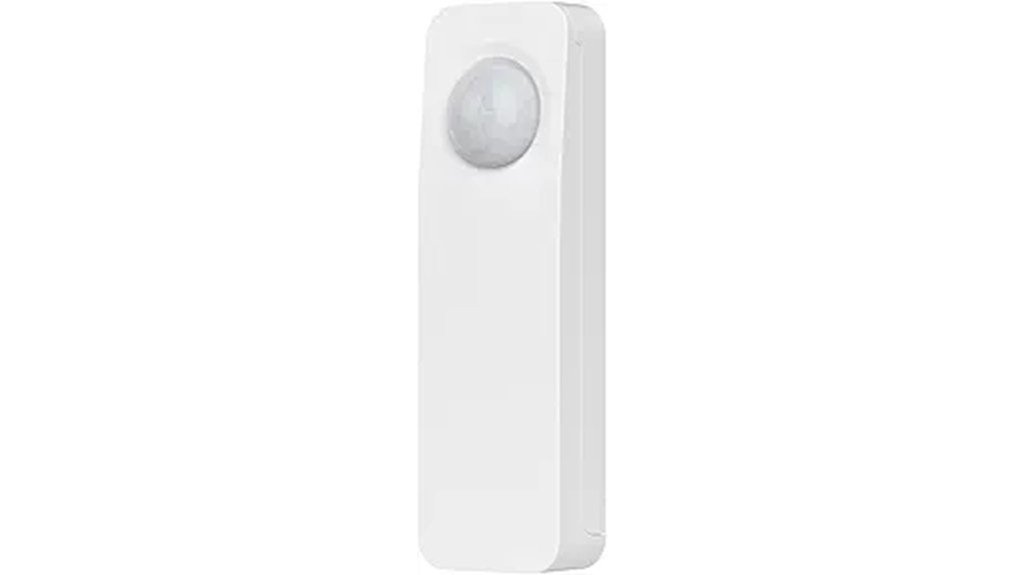
The THIRDREALITY Zigbee Motion Sensor is a good choice for smart homes. It works well with popular platforms like SmartThings and Amazon Alexa. It also connects to many Zigbee hubs, such as Home Assistant, Aeotec, Hubitat, and Echo devices with built-in Zigbee hubs like Echo Plus. If you add the optional Smart Bridge MZ1, it works with Apple HomeKit, Google Home, and others.
Setting up the sensor is fast and easy. It takes only a few seconds to install. You can customize it a lot to fit your needs. The sensor can detect motion up to 20 feet away. It runs on two AAA batteries, which last about two years. Keeping the sensor updated is simple with over-the-air firmware updates, making sure it stays secure and working well.
Best For: People who want simple, smooth setup and easy integration with platforms like SmartThings, Amazon Alexa, and Apple HomeKit. It’s great for automating lights and alarms when motion moves.
Pros:
- Works with many Zigbee hubs and smart homes.
- Easy and quick to install indoors.
- Batteries last a long time, about two years.
Cons:
- Needs a Zigbee hub to work, which adds an extra step.
- Not for outdoor use; it is only for inside.
- Firmware updates need over-the-air tools, which not all hubs might support.
This sensor is simple, reliable, and easy to use. It’s perfect if you want a motion sensor that fits nicely into your smart home system.
Factors to Consider When Choosing Smart Motion Sensors for Pets
When choosing a smart motion sensor for your pets, we recommend considering pet-friendly detection features and adjustable sensitivity settings to avoid constant false alarms. We’ve tested sensors that cover up to 30 feet with a 110-degree wide angle, which seems to work well for most home layouts, but placement is key—trust us, a poorly placed sensor is just a fancy paperweight. Our pro tip: look for models compatible with your existing smart hubs and think about how you’ll position them to maximize coverage without alarming the whole neighborhood!
Pet-Friendly Detection Features
Since pets move a lot, pick a motion sensor that’s pet-friendly. These sensors can be set to different sensitivity levels. That way, you can adjust them so they don’t go off when your pet moves around. Many sensors work only for animals up to 25 pounds. This keeps small animals from setting off alarms. Infrared (PIR) sensors can tell the difference between people and pets based on heat. This reduces false alarms. Some sensors have pet-immune zones or specific viewing angles. These stop playful paws from triggering alerts. Many models also let you control detection areas through a smartphone app. This helps you block out spots your pet can’t reach. After setting up your sensor, test it to make sure it works well for your pet’s size and habits.
Adjustable Sensitivity Settings
Adjustable sensitivity settings are important when choosing a smart motion sensor for pets. These settings let you decide how much movement will cause an alarm. This is useful because different pets move in different ways. Small pets like hamsters move tiny amounts, while big, active dogs move a lot.
By changing the sensitivity, you can stop false alarms. For example, if your sensor is too sensitive, it might start alerting when your pet jumps or shakes. Lowering the sensitivity helps ignore small movements. Turning up the sensitivity can detect small movements from pets up to 7 meters away, which is good for large areas.
If you set the sensitivity just right, you get fewer false alarms and better coverage. A good idea is to start at a middle setting. Watch how your pet moves, then adjust the sensitivity until it works well. This way, the sensor alerts you only when needed, making it more reliable.
False Alarm Prevention
Many things affect false alarms with pet motion sensors. Adjusting the sensitivity makes a big difference. If it’s too high, every cat or dog might set it off. If it’s too low, real threats might not trigger the alarm. Sensors with adjustable zones let you block areas your pet moves a lot, like near their food bowls. Infrared (PIR) sensors are very helpful. They tell the difference between people and pets, so the alarm won’t go off every time your cat jumps on the couch. Setting the right timing also helps. Small paw swipes shouldn’t set off the alarm. Putting sensors higher on walls can stop pets from interfering. This makes sure you get fewer false alarms and stay peaceful at home.
Compatibility With Smart Hubs
When you choose a smart motion sensor for your home, make sure it works with your existing smart hub. This is important so all your devices can talk to each other easily. Check if the sensor matches your hub, like Samsung SmartThings, Hubitat, or Alexa with a Zigbee built-in. Most sensors use the 2.4 GHz Wi-Fi band, so verify this to avoid connection problems. Some sensors need a specific hub model to get special features, like pet detection or adjustable sensitivity. Connecting your sensor to the right smart home system, like Apple HomeKit or Google Assistant, makes setting up automations much easier. Also, keep your sensor updated with firmware updates through your hub. This helps keep it secure and functioning well.
Placement and Coverage
When you put your pet motion sensor in a spot, think of it like placing a little lookout. You want it to watch the right areas without missing anything. Mount the sensor about 2 to 3 feet high. This height helps catch pets that run around but keeps away false alarms from shadows or tiny animals.
Make sure the sensor can see at least a 170° area. It should also cover up to 4 meters. That way, it won’t miss anything in its line of sight. Keep furniture or things that might block the sensor out of the way.
Don’t put the sensor near vents, heaters, or windows with sunlight. Changes in temperature and light can cause false alarms. Also, check that the sensor is no more than 10 meters from your hub. This keeps everything working smoothly.
Good placement makes a big difference. It helps your sensor do its job well and keeps your home safe.
Frequently Asked Questions
How Do Smart Motion Sensors Differentiate Between Pets and Humans?
Smart motion sensors differentiate between pets and humans by using advanced algorithms and adjustable settings to recognize size, movement patterns, and heat signatures, helping you minimize false alarms and focus only on significant activity in your home.
Can These Sensors Be Integrated With Existing Smart Home Systems?
Yes, these sensors often integrate seamlessly with existing smart home systems, allowing you to automate alerts and security features. You simply connect them via compatible platforms like Alexa, Google Home, or SmartThings, enhancing your home’s security effortlessly.
What Is the Typical Battery Life of Pet-Friendly Motion Sensors?
Pet-friendly motion sensors typically last between six months to a year on a single battery, depending on usage and power settings. You should monitor battery levels regularly and replace or recharge to guarantee continuous safety and security for your pets.
Are There Privacy Concerns With Using Smart Indoor Cameras?
Yes, smart indoor cameras can raise privacy concerns because they record and store footage, potentially exposing your personal space. You should use strong passwords and enable security features to protect your data and maintain control over your privacy.
How Accurate Are Motion Sensors in Detecting Small or Silent Pets?
Motion sensors can be quite accurate at detecting small or silent pets if they feature advanced algorithms and adjustable sensitivity settings. However, some may occasionally miss very quiet or tiny movements, so choosing the right sensor is essential.

Iris is a passionate tech enthusiast dedicated to helping consumers make informed technology decisions through honest, detailed product reviews and comprehensive buying guides.