
3 Best Smart Irrigation Systems for Gardens
When it comes to keeping your garden lush while conserving water, choosing the right smart irrigation system is essential—and we’ve tested a few to see which truly make a difference. From flexible drip systems to WiFi-enabled controllers, each offers features that can save time and resources. We’ve found that the best solutions balance customization, ease of use, and advanced tech, making garden care easier without fussing over every drop. Curious which system fits your garden’s size and needs? Stick around; the options might surprise you.
60FT Drip Irrigation System with Water Timer for Garden and Yard
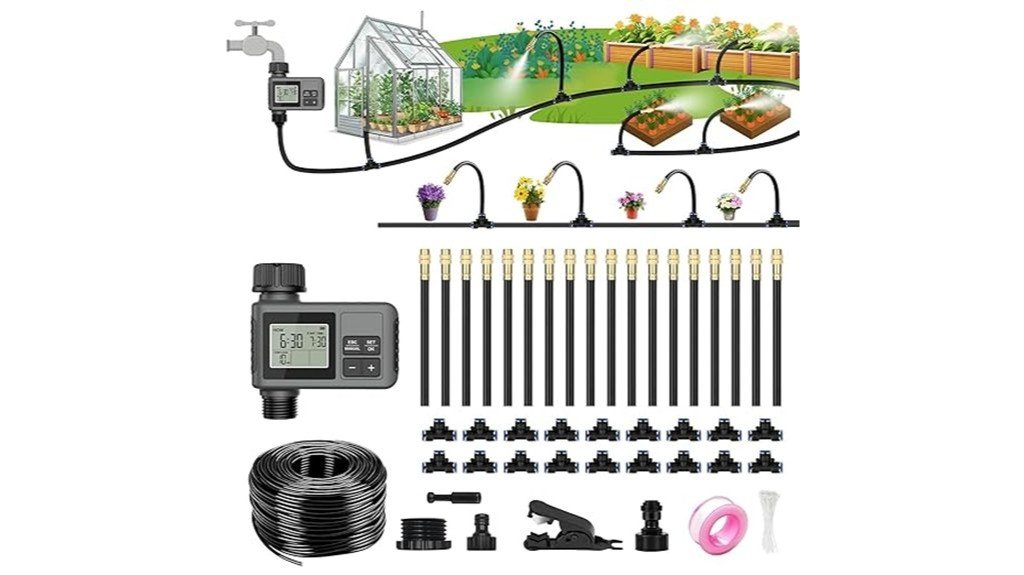
Are you tired of watering your garden by hand? Do you want a simple way to keep your plants healthy without too much work? The 60FT Drip Irrigation System with Water Timer makes watering easy and hassle-free. It works well for gardens of all sizes, from flower beds to vegetable patches. The flexible tubing and adjustable nozzles help you water exactly where your plants need it.
This system is built to last. It’s made with rustproof aluminum and hoses that resist sun damage. The water timer is fully programmable. You can set it to water at different times, add rain delays, and create multiple watering schedules. It’s easy to set up—no tools needed. Just follow the simple instructions, and you’ll be ready to go.
This irrigation system is perfect for homeowners, gardeners, and DIY lovers who want an easy and reliable way to water their plants. It saves time and helps keep your garden healthy.
Some things to keep in mind:
- You might need extra adapters if threading doesn’t match your hoses.
- If your water pressure is very high, you might want to adjust it to prevent spray issues.
- Sometimes, hoses and connectors vary in quality, so you might need extra fittings or small repairs.
Smart Sprinkler Timer for Garden Hose (3 Zones)
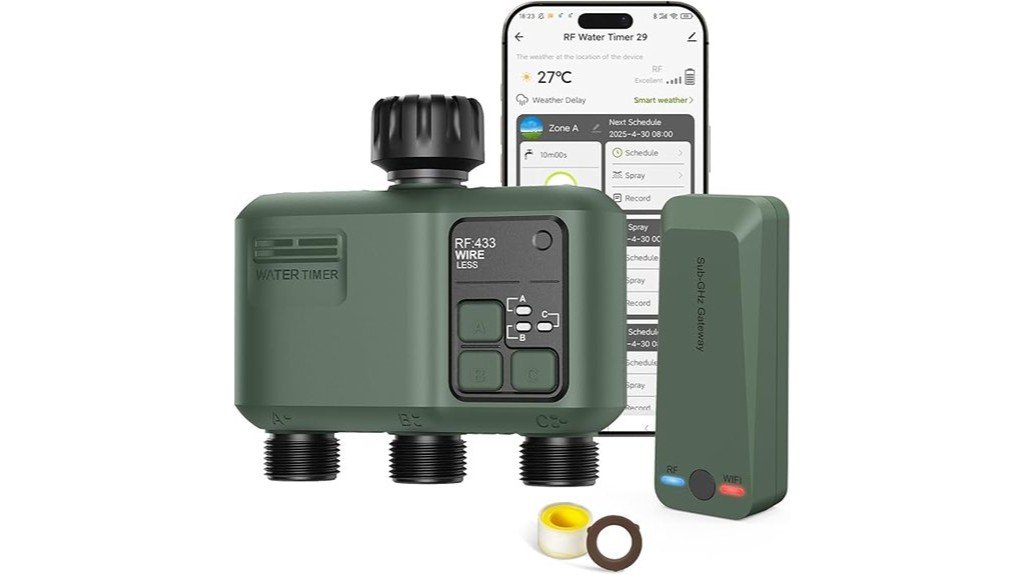
If you want to water your garden easily and avoid wasting water, this smart sprinkler timer can help. It connects to your WiFi using the Smart Life or Tuya app. You can control it from anywhere, as long as you have your phone. It also works with Alexa and Google voice commands. So, you can just ask your voice assistant to start watering.
This timer covers up to 984 feet. That is three times farther than Bluetooth timers, perfect for big yards. You can add up to four timers to cover even more areas. You can make a watering schedule that fits your garden’s needs. There is a rain delay feature, so it skips watering when it rains. It also has five watering modes to choose from. The timer is built to last outdoors because it is waterproof with an IP55 rating.
This system is best for homeowners who have large or multi-zone gardens. It makes watering simple and remote. You don’t have to be home or touch the timer to water your garden.
Here are some good points:
- You can control it from your phone or with your voice commands using Alexa or Google.
- It has a wide WiFi range of up to 984 feet.
- It is waterproof and built to handle the weather.
But, here are some things to watch out for:
- It only works with 2.4GHz WiFi, so check if your network is compatible.
- Setting it up can be hard if you are new to smart home devices.
- If you want to add more than four timers, you may need extra hubs, which can cost more.
This timer helps you water your garden easily and smartly. It works with your phone and voice so you can control your watering from anywhere. It covers large yards, is waterproof, and lets you make your own watering schedule.
Breeze Touch 120FT Automatic Drip Irrigation Kit with Timer
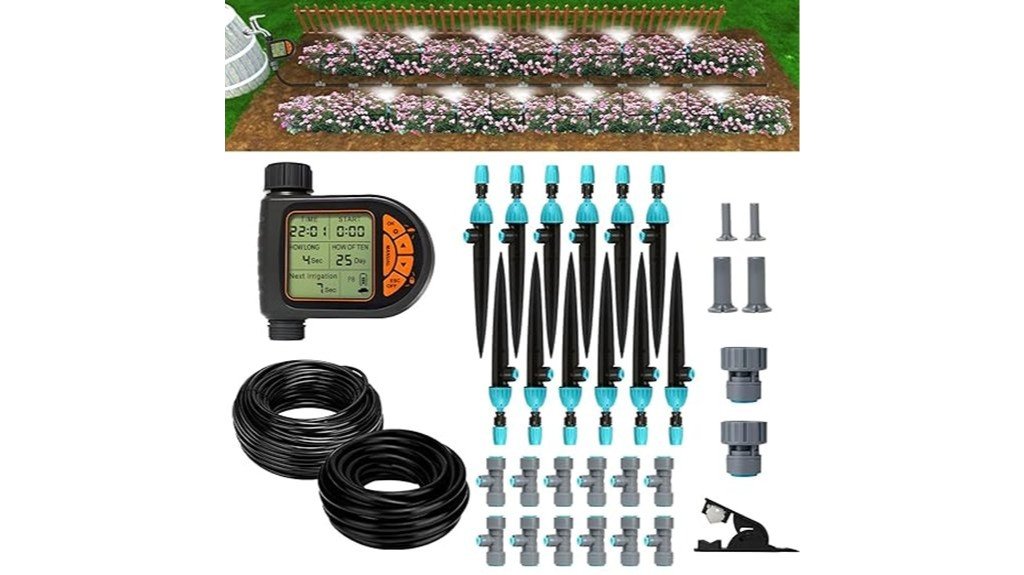
The Breeze Touch 120FT Automatic Drip Irrigation Kit with Timer is a great choice if you want an easy-to-use watering system. It has everything you need to water your garden. The kit includes 79 feet of small 1/4-inch tubing, 40 feet of larger 1/2-inch hose, and 12 adjustable drippers. It also comes with connectors and a cutter. Setting up this kit is simple. It takes about 10 minutes, and you won’t need any tools.
This system has smart features like rain delay and eight different watering modes. These help ensure your plants get water regularly, no matter what the weather is like. The adjustable drippers let you target water to specific plants and save water overall. The parts are made to last outside, so they won’t get damaged by weather.
The kit is best for homeowners and gardeners who want an easy, reliable, water-saving system for their garden, raised beds, or outdoor yard. It’s practical, sturdy, and flexible, making watering quick and simple.
Some downsides include that the system runs on batteries, so you will need to replace or recharge them over time. The tubing length might not be enough for larger gardens, so you may need extra parts. Also, some users find they need to adjust the drippers manually for the best water flow.
Factors to Consider When Choosing Smart Irrigation Systems for Gardens
When choosing a smart irrigation system, we understand that compatibility with your devices matters—nothing’s more frustrating than a high-tech gadget that refuses to talk to your smartphone. You also want to make sure the watering coverage range suits your garden’s size, whether it’s a cozy 100-square-foot backyard or a sprawling acre; trust us, measuring your zone helps prevent dry patches or overwatering. Finally, we’ll share insights on how easy these systems are to install and whether they can stand up to rainy days or scorching heat—because durability isn’t just a bonus, it’s a must.
Compatibility With Devices
Ever wonder how your smart garden works with other gadgets? It’s important to check if your irrigation system can connect easily. First, see if it uses the same WiFi band as your home. Most systems run on 2.4GHz WiFi, so make sure yours does too.
Next, check if it works with voice assistants like Alexa or Google Home. That way, you can just tell it to water your plants. Also, see if the app works on your phone. Sometimes apps only work on iPhones or Android phones, so pick one that fits your device.
Make sure it can connect to your existing smart home setup. This helps everything work together smoothly. If you have a big yard or tricky spots, look for a system that lets you control multiple zones. Expandable systems are good because you can add more zones later.
This way, your garden stays healthy, and your gadgets all work in sync.
Watering Coverage Range
Knowing how far your smart irrigation system can water is important. This helps your garden stay healthy and look good. If the system covers a big area with no gaps, you won’t have dry spots or overwatered patches. Some systems use WiFi or RF signals that reach up to 984 feet (300 meters). These can control many zones at once without losing connection. When choosing a system, think about your garden size. Large gardens need systems that can cover more ground. Some systems connect multiple controllers or zones. This expands how much you can water.
A good tip: measure your garden carefully before buying a system. Pick one that can cover the whole area. A system with the right range makes watering easier. It helps keep your garden lush and prevents dry or crispy spots.
Programmability and Control
Having a smart irrigation system that lets you set watering schedules easily is very helpful for your garden. It’s important to choose a system that gives you control over when and how long each area gets water. This helps prevent overwatering or underwatering your plants. Features like rain delay mode and seasonal changes make watering smarter, saving water and keeping your plants healthy. Being able to manage your system from a smartphone app or voice commands makes things even easier. You can water your garden from the couch or while on vacation. Systems with multiple zones let you set different schedules for different parts of your yard, like flower beds and vegetable patches. A simple and clear menu makes it easy to set up and change watering plans. Spending a little more on a system with easy controls pays off because it helps you care for your garden with less hassle.
Durability and Weatherproofing
When picking a smart irrigation system, durability and weatherproofing matter a lot. Your system will be outside, so it needs to handle rain, sun, and wind. Look for parts made to resist weather. For example, use tubing that is UV-resistant. This helps the plastic last longer in the sun. Make sure the electronic parts are waterproof. Ratings like IP55 mean the system can keep dust out and resist water. That way, it will keep working, even during storms.
Choose connectors made of rustproof aluminum or tough plastics. This prevents rust from ruining your connections over time. Use seals and gaskets made of silicone to keep dirt and water away from the inside. Protect your electronics with casings that block extreme temperatures and UV rays. Systems with these features last longer and stay in good shape. Good weatherproofing saves you money because you won’t need to fix or replace parts often.
Installation Complexity
Installing a smart sprinkler system might seem easy at first. But how hard it is depends on your garden. Smaller systems that you can put together without tools are simple. You just snap the parts together and start.
If your garden is big or has different watering zones, the job gets tougher. You will need to do more wiring and connect more parts. Sometimes, you might need to change your pipes or add special fittings. Wireless systems are also popular. They seem simple, but you need a good WiFi signal near your garden. It helps the system work smoothly. Sometimes, you will need to use splitters, adapters, or pressure regulators. These can be confusing if you are new to this.
Thinking ahead about your garden layout and where your water comes from can make installation easier. Planning helps you avoid mistakes and saves time. Doing a little homework before starting makes the job less stressful. With the right planning, you’ll finish faster and do a good job.
Frequently Asked Questions
How Compatible Are Smart Irrigation Systems With Existing Garden Sensors?
Smart irrigation systems often integrate seamlessly with existing garden sensors, allowing you to automate watering based on soil moisture, weather conditions, and more. Just guarantee your sensors are compatible, and you’ll enjoy efficient, water-saving garden management.
Can Smart Irrigation Systems Be Integrated With Home Automation Platforms?
Yes, you can integrate smart irrigation systems with home automation platforms like Alexa or Google Home. You’ll need compatible devices, and connecting them allows you to control your watering schedule through voice commands or smartphone apps easily.
What Are the Energy Consumption Differences Between Manual and Smart Systems?
Smart systems typically use more energy due to ongoing sensor operation and connectivity, while manual systems consume less energy but require more user effort. Your choice depends on balancing energy use with convenience and water efficiency.
Are Smart Irrigation Systems Suitable for Large-Scale Agricultural Use?
Yes, smart irrigation systems suit large-scale agriculture because they optimize water use, reduce waste, and can be managed remotely, saving you time and effort while increasing crop yields through precise, automated watering schedules tailored to your fields’ needs.
How Do Weather Forecasts Impact the Operation of Smart Irrigation Systems?
Weather forecasts let your smart irrigation system adjust watering schedules, conserving water and preventing overwatering. You benefit from timely, weather-based decisions, ensuring your garden stays healthy while optimizing water use and reducing utility costs effectively.

Iris is a passionate tech enthusiast dedicated to helping consumers make informed technology decisions through honest, detailed product reviews and comprehensive buying guides.