
3 Best Door Bell Cameras for Lawns in 2026 – Top Picks
If you’re looking to protect your lawn and give yourself peace of mind, you’ll want to take into account the top doorbell cameras of 2026. We’ve tested several, and what stands out are features like high-definition video—usually 2K or 4K—advanced night vision, storing footage locally or in the cloud, and AI detections that cut false alarms. Yet, choosing the right one isn’t just about specs; it’s about how well they suit your yard’s size, climate, and Wi-Fi setup. Keep reading to discover the options that truly deliver security without complications.
ecobee Total Security and Savings Bundle with Smart Doorbell Camera (Wired), SmartSensor for Doors and Windows, and Smart Thermostat Premium
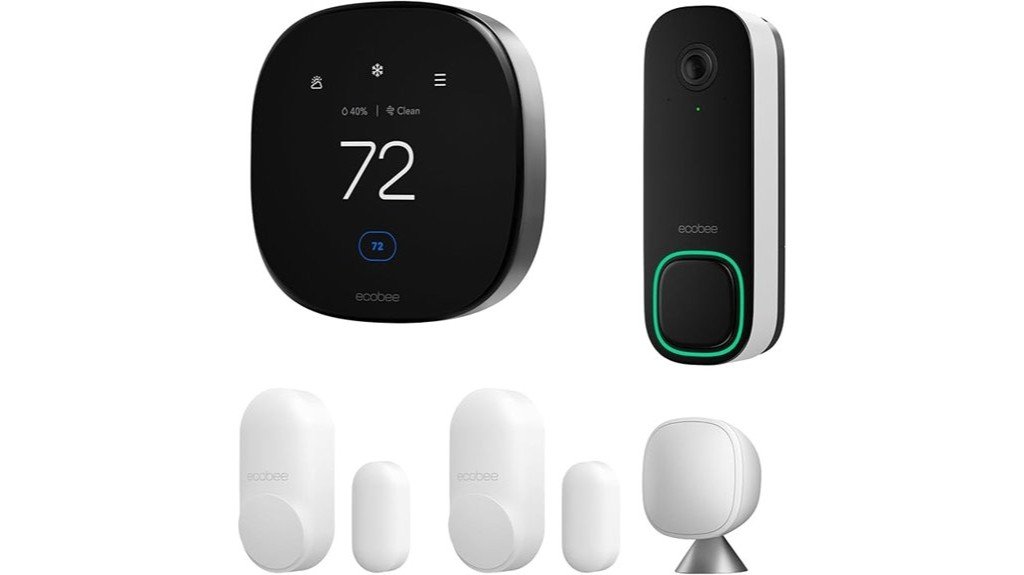
If you want to make your home safer and save money on energy bills, the ecobee Total Security and Savings Bundle is a good choice. It combines different smart devices that work together to protect your home and cut energy costs. The wired smart doorbell shows clear HD 1080p video, so you can see visitors in full detail. It has a wide view, so you catch more of what’s happening outside. The SmartSensor for doors and windows sends alerts when someone opens or closes them. The Smart Thermostat Premium can help you cut heating and cooling costs by up to 26%. It’s like having a small security team that also saves you money.
Best For: Homeowners who want a simple, all-in-one smart home security and energy-saving system that’s easy to use and control with an app.
Pros:
- Combines security, saving energy, and smart home tools in one package.
- Provides clear 1080p video with wide-angle views and two-way talk.
- Helps reduce energy bills by up to 26% and alerts you right away if doors or windows open.
Cons:
- The outdoor security features only work in the US and Canada.
- Installing the system can be tricky if you’re not familiar with electrical work.
- Some users find it hard to set up or get the sensors working at first.
This bundle is a simple way to protect your home and save money. It’s great if you want smart tools that are easy to control and give you peace of mind.
Wireless Video Doorbell with Chime, AI Motion Detection & HDR Night Vision
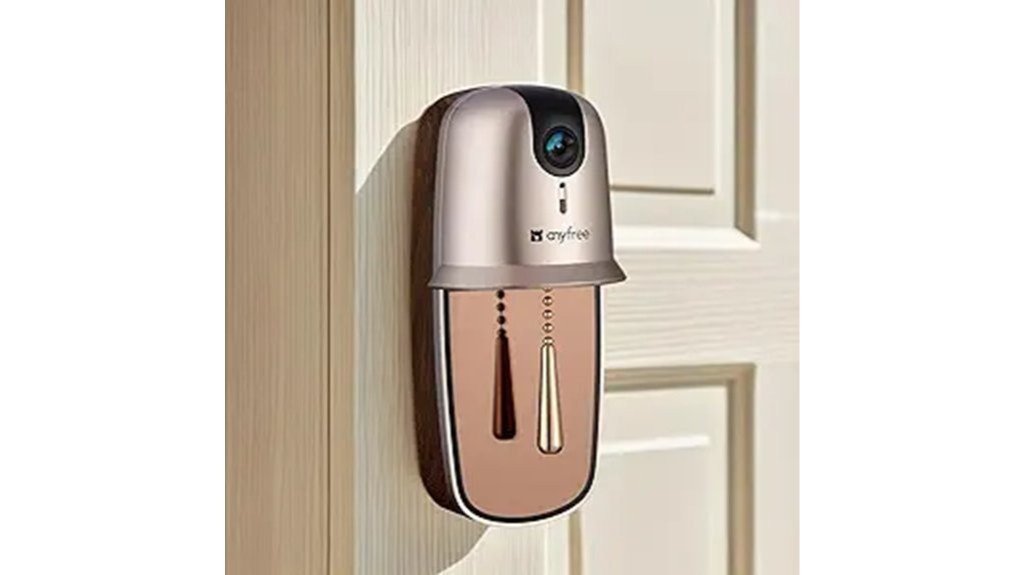
A wireless video doorbell with a chime, AI motion detection, and HDR night vision is a great choice for people who want security and convenience. The built-in battery works with solar power, so it lasts longer. You can also charge it with a USB if needed. It connects to dual-band Wi-Fi, which means streaming stays smooth even if your Wi-Fi has weak spots. Plus, it uses Wi-Fi HaLow, which can reach up to 1 km for long-range connection.
The HDR night vision makes a big difference. We tested it in low light, and the images stayed clear and sharp. The AI can recognize familiar faces, so you get alerts for family, visitors, and delivery people. And there are no extra subscription costs to store videos locally on a microSD card.
Best for: Homeowners who want a smart, long-range doorbell with good security features and easy local storage.
Pros:
- Solar panel helps save battery life, with occasional USB charging
- Long-range Wi-Fi HaLow connection up to 1 km
- AI can recognize faces and send personalized alerts
Cons:
- SD card (up to 128GB) is sold separately
- Needs regular charging, even with solar power
- Some features might take time to learn and use
This doorbell makes your home safer and more connected. It’s simple to understand and use, helping you keep an eye on your door easily.
ecobee Home Security Bundle with Smart Doorbell and Sensors
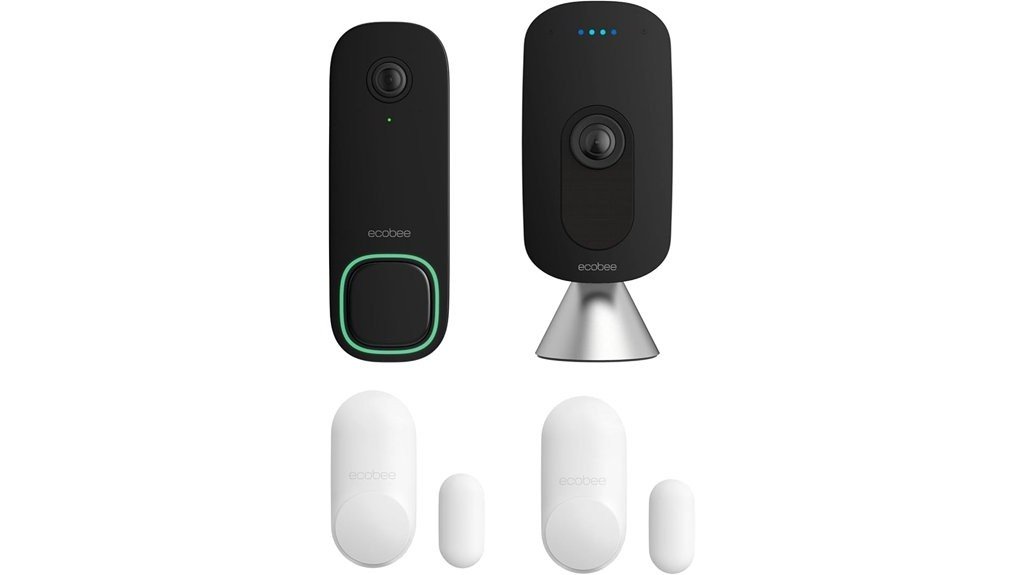
The ecobee Home Security Bundle with its smart doorbell is a good choice for people who want a simple, reliable security system. The camera shows clear 1080p HD video with HDR, so you can see well even at night. It has a wide lens that covers a lot — 175° vertically and 187° diagonally — making it great for watching your lawn and front porch. The night vision helps you see in the dark, and smart detection tells the difference between people, animals, or packages. This helps prevent false alarms.
The system works smoothly with other smart devices, so you can connect it to your existing smart home setup. It’s easy to install, taking about an hour, especially if you already have wired connections. The app is simple to use, letting you control everything from your phone.
Best for: People who want a simple, trusted way to keep their home safe. It’s perfect if you like working with other smart devices, especially Apple products.
Pros:
- Clear 1080p HD video with HDR, even in the dark
- Easy to install, usually in about an hour
- Works well with other smart home devices, including Ecobee thermostats and Apple HomeKit
Cons:
- You need a subscription for full video history and some extra features
- Notifications can sometimes arrive a little late
- Zoom or pan features have small delays and might not work perfectly all the time
This system helps keep your home safe and is easy to set up and use. It’s a good option if you want good video quality and simple smart device control.
Factors to Consider When Choosing Door Bell Cameras for Lawns
When selecting a doorbell camera for your lawn, we understand that video clarity, night vision, and motion detection are at the top of the list—you want to see clearly even if it’s pitch dark outside. We’ve tested models that withstand all kinds of weather—from heavy rain to blazing sun—so you don’t have to worry about your camera giving up during a storm. Pro Tip: look for features like adjustable motion zones and easy installation, because no one wants a bulky gadget that’s a nightmare to set up or precise only half the time.
Video Clarity Quality
Getting clear video from your doorbell camera isn’t just about buying the newest gadget. It depends on a few key things that make your picture sharp and easy to see. First, choose a camera with at least 1080p HD resolution. This makes the images clear so you can see faces or license plates easily.
Night vision with HDR helps when it’s dark outside. It balances bright and dark areas so the picture isn’t too dark or too bright. Higher frame rates, like 30 frames per second or more, keep the video smooth. That helps when people move quickly so the video doesn’t turn blurry.
Optical zoom lets you zoom in closer without losing image quality. Digital zoom can pixelate or make the picture blurry, so optical zoom is better. Also, a larger sensor size makes the camera more sensitive and clearer, especially in tricky light.
Think of these features as tools that help you see better. They keep your view clean and clear so you won’t miss important details.
Night Vision Capabilities
Even if it’s totally dark outside, good night vision helps you see what’s happening. Some doorbell cameras have special lights called infrared LEDs. They let the camera take clear pictures in low light. This means you can watch your yard any time, day or night. Some cameras let you change how bright the IR lights are or switch automatically. The auto switch keeps things from glare and makes it easy to use.
Clear picture quality is also important. Cameras with HD night vision, which means 720p or higher, give sharp footage. This helps you see faces or objects clearly. Range matters too. Look for cameras that can see 20 to 30 feet in the dark. This way, you won’t miss anything happening far away.
Good night vision makes security simple. It helps you check footage easily and keeps your home safe all the time.
Motion Detection Precision
While no alarm system is perfect, choosing a doorbell camera with good motion detection makes a big difference. It helps you know when someone is at your door and keeps false alarms low. Good cameras use AI technology that can tell the difference between a real person and things like wind or animals that can trigger alarms by mistake.
You should look for cameras that let you set specific areas where you want to detect motion. This way, you can avoid getting alerts from busy streets or trees moving nearby. Setting the right sensitivity also helps prevent false alarms. If the sensitivity is too high, the camera may send alerts for small things; if it’s too low, it might miss important motion.
Night vision features like HDR or infrared light are very helpful. They keep the camera clear in dark conditions, so you see what’s happening even after sunset. Having a wide viewing angle can be good, but it may also cause more false alarms if not set up properly. So, adjusting your detection zones and sensitivity is important.
A simple tip is to fine-tune your camera’s detection settings. That way, you only get alerts when needed. This keeps you aware of real visitors without getting bothered by false alarms all the time. Good motion detection makes your home safer and your day easier.
Weather Resistance Features
Choosing a doorbell camera that can handle all weather is important. You want it to last and work well outside all year. Look for cameras with an IP65 rating. This means they can stand up to heavy rain, snow, and splashes. Strong materials like aluminum or tough plastic help the camera resist sun damage and rust over time. Make sure the cables are sealed with gaskets so water can’t get inside. Water inside can break the camera, and you don’t want that. If you live in cold or hot places, check the temperature range. Some cameras work from -20°C to 50°C. A few cameras even have built-in heaters to keep the lens clear in cold weather. Remember, a weatherproof camera should work well in rain, snow, heat, and cold all year long.
Installation Ease Level
Installing a doorbell camera can seem easy, but it depends on the type you choose. Wireless cameras are usually the simplest. You just put up the camera and connect it to an app. This can take less than 30 minutes. Many wireless models come with clear instructions and don’t need wiring. If your camera works with your existing doorbell wires, it makes setup even faster and easier—no new wires needed. A chime adapter can help connect the camera to your current doorbell chime, saving more time. Think about the tools you need too. Most cameras only need a screwdriver or drill. From our experience, cameras that don’t need much wiring and are easy to mount make installation quick and simple.
Power Source Options
Have you thought about how your doorbell camera gets power? The way it gets energy can change how well it works and how easy it is to set up.
There are three main options: wired, battery, and solar. Wired cameras get power through wires. They work all the time and don’t run out. But, they can be tricky to install because you need a professional to do it.
Battery-powered cameras are simple to put up. You just hang them and go. But, they don’t last forever. You will need to change or recharge the batteries every few months. This depends on how often the camera is used.
Solar-powered cameras use sunlight to recharge. They are good if you want an eco-friendly choice. But, they work best if your camera is in a sunny spot. If your yard stays shady, they might not keep enough charge.
Think about how much sun your porch gets and how often you want to change batteries. Choose the power option that fits your life best. If you want to avoid fixing batteries often, go for wired or solar if possible. The right choice keeps your camera working smoothly and makes setup easier.
Smart Home Compatibility
Many people use smart home systems to make life easier. If you have a doorbell camera, check if it works smoothly with those systems. Different cameras work with Apple HomeKit, Amazon Alexa, or Google Assistant. Make sure your camera can connect to your favorite platform. This way, it can work with your smart locks, sensors, or thermostats.
Look for a camera with a good app that matches your phone or tablet. That makes it easier to control and set up your camera. Also, check the Wi-Fi. A camera with dual-band Wi-Fi (2.4 GHz and 5 GHz) will give you a stronger, more stable connection.
Think about special features too. Some cameras can recognize people or pets and send you tips or alerts. Custom alerts can help you stay notified without getting too many false alarms. That way, you stay safe and informed without the fuss.
Frequently Asked Questions
How Do Weather Conditions Affect Doorbell Camera Performance?
Weather conditions can impact your doorbell camera’s performance by causing technical issues like fogging, water damage, or poor connectivity. You should choose weather-resistant models and maintain them regularly to guarantee they work effectively in various conditions.
Can Doorbell Cameras Be Integrated With Existing Home Security Systems?
Yes, you can integrate doorbell cameras with your existing home security system. Most modern models are compatible, allowing you to connect them via Wi-Fi or alarm systems, enhancing your overall security and enabling centralized monitoring and control.
What Is the Typical Battery Life for Wireless Doorbell Cameras?
Wireless doorbell cameras usually last between 1 to 12 months on a single battery, depending on usage, motion activation, and camera settings. You can extend battery life by adjusting motion sensitivity and leveraging power-saving modes.
Are There Privacy Concerns With Smart Doorbell Cameras on Lawns?
Yes, you might have privacy concerns with smart doorbell cameras on lawns, especially regarding data security, unauthorized access, and potential recording of neighbors or passersby, so make certain you choose devices with strong encryption and clear privacy policies.
How Do AI Motion Detection Features Reduce False Alarms?
AI motion detection reduces false alarms by intelligently distinguishing between humans, animals, and objects, so you only get alerts for genuine activity. This technology minimizes unnecessary notifications, helping you respond promptly to real threats on your lawn.

Iris is a passionate tech enthusiast dedicated to helping consumers make informed technology decisions through honest, detailed product reviews and comprehensive buying guides.